

Blog
Sleep disorders and their effects on human Health

Introduction
Sleep disorders are problems that affect a person’s sleep. Some people cannot sleep properly, while others wake up many times during the night or feel tired after sleeping. Good sleep is very important for a healthy body and mind. When a person does not get enough sleep, it can cause stress, weakness, poor concentration, and other health problems. Sleep disorders can also affect daily activities, mood, work, and studies. These problems can happen to anyone and should not be ignored because proper sleep helps the body stay active and healthy.
What are sleep disorders and why do they matter?
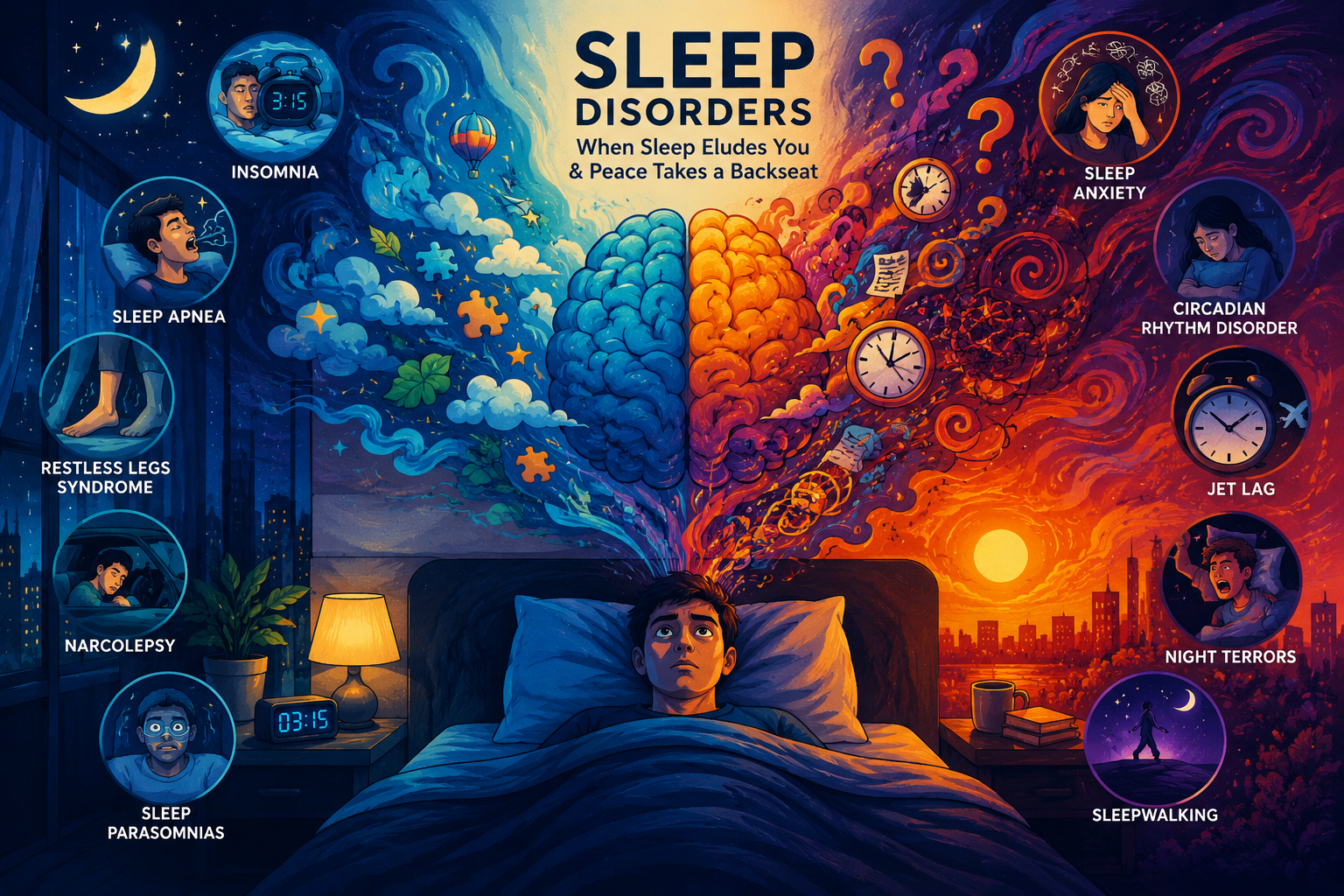
Sleep disorders are conditions that affect the quality, timing, or amount of sleep a person gets. These problems can make it hard to fall asleep, stay asleep, or get enough rest during the night. Some people may sleep too much, while others may wake up feeling tired and weak. Common sleep disorders include insomnia, sleep apnea, restless leg syndrome, and narcolepsy. These disorders can happen because of stress, unhealthy lifestyle, illness, depression, or poor sleeping habits.
Sleep disorders matter because sleep is very important for the human body and mind. Proper sleep helps the body recover, improves memory, keeps the heart healthy, and gives energy for daily activities. When a person does not get enough sleep, it can affect physical and mental health. Poor sleep can cause tiredness, headaches, stress, anger, lack of concentration, and weak performance at school or work. Long-term sleep problems may also increase the risk of serious diseases such as heart disease, diabetes, obesity, and depression.
Common types of sleep disorders in humans
There are many types of sleep disorders that affect people in different ways. Some disorders make it difficult to sleep, while others disturb sleep during the night. These problems can affect health, mood, and daily life.
One common type of sleep disorder is insomnia. People with insomnia find it hard to fall asleep or stay asleep. They may wake up many times during the night and feel tired in the morning. Stress, anxiety, depression, and unhealthy sleeping habits are common causes of insomnia.
Another common sleep disorder is sleep apnea. In this condition, a person’s breathing stops and starts again many times during sleep. People with sleep apnea often snore loudly and feel tired during the day even after sleeping for many hours. This disorder can become serious if it is not treated properly.
Restless leg syndrome is also a common sleep problem. People with this disorder feel an uncomfortable sensation in their legs and a strong need to move them, especially at night. This makes it difficult to relax and sleep peacefully.
Main causes of poor sleep and sleeping problems
Poor sleep and sleeping problems can happen because of many reasons. These problems can affect people of all ages and may become serious if they continue for a long time. Understanding the main causes of poor sleep can help people improve their sleeping habits and overall health.
One major cause of poor sleep is stress and anxiety. When a person worries too much about work, studies, family, or daily problems, the mind stays active and it becomes difficult to relax and sleep peacefully. Depression and sadness can also disturb sleep and make a person feel tired all the time.
Unhealthy lifestyle habits are another common cause of sleeping problems. Using mobile phones, watching television, or spending too much time on social media before bedtime can affect sleep quality. Drinking too much tea, coffee, or energy drinks at night can also make it hard to fall asleep because they contain caffeine.
Poor sleeping routines can also lead to sleep problems. Sleeping at different times every day, staying awake late at night, or not getting enough sleep regularly can disturb the body’s natural sleep cycle. A noisy or uncomfortable sleeping environment may also affect proper rest.
How Lack of sleep affects physical Health
Lack of physical activity can have a bad effect on human health. Physical activity is very important for keeping the body strong, active, and healthy. When people do not exercise or move their bodies regularly, many health problems can develop over time.
One major effect of lack of physical activity is weight gain and obesity. When the body does not burn enough calories, extra fat starts to build up. Obesity can increase the risk of many serious diseases such as diabetes, heart disease, and high blood pressure.
Lack of exercise can also weaken the muscles and bones. People who are not physically active may feel tired and weak more often. Their body may lose strength and flexibility, making daily activities more difficult. Weak bones can also increase the risk of fractures and joint pain.
Negative Effects of sleep Disorders on mental health
Sleep disorders can have many negative effects on mental health. Proper sleep is very important for a healthy mind and emotional balance. When a person does not sleep well, it can affect thoughts, feelings, behavior, and daily life.
One common effect of sleep disorders is stress and anxiety. People who do not get enough sleep often feel worried, nervous, and uncomfortable. Lack of sleep can make small problems feel bigger and harder to manage.
Sleep disorders can also lead to depression. A person may feel sad, lonely, hopeless, or lose interest in daily activities. Poor sleep and depression are closely connected because both problems can make each other worse.
Another negative effect is poor concentration and weak memory. People with sleep problems may find it difficult to focus on work, studies, or daily tasks. They may forget things easily and make more mistakes because the brain does not get enough rest.
Why Teenagers and adults face sleeping problems
today
Today, many teenagers and adults face sleeping problems because of modern lifestyle habits and daily stress. Busy routines, unhealthy habits, and mental pressure are some of the main reasons why people are not getting proper sleep.
One major reason is the excessive use of mobile phones, laptops, and social media. Many teenagers and adults spend long hours using screens before bedtime. The bright light from screens affects the brain and makes it difficult to fall asleep quickly.
Stress and anxiety are also common causes of sleeping problems. Teenagers may feel pressure because of studies, exams, and social life, while adults often worry about work, family responsibilities, and financial problems. Too much thinking and worry can keep the mind active at night and disturb sleep.
Another reason is unhealthy daily routines. Many people sleep late at night and wake up early in the morning. Some people do not follow a regular sleep schedule, which affects the body’s natural sleep cycle.
Poor eating habits can also create sleep problems. Drinking too much tea, coffee, soft drinks, or energy drinks, especially at night, can make it hard to sleep. Eating heavy meals late at night may also cause discomfort and disturb
Conclusion
In conclusion, sleeping problems are very common in teenagers and adults today because of stress, unhealthy routines, too much screen time, and lack of physical activity. Poor sleep can affect both physical and mental health and can make daily life more difficult. Good sleep is very important for a healthy body and mind. People should follow healthy habits, reduce stress, use less mobile phones at night, and maintain a proper sleep routine to improve their sleep and live a healthy and active life.