

Blog
How to Keep Bones Strong and Healthy

Introduction
Strong and healthy bones are important for a healthy and active life. Our bones support the body, protect vital organs, and help us move easily. As we grow older, bones can become weak if we do not take proper care of them. Following healthy habits, eating nutritious foods, and staying physically active can help improve bone strength and reduce the risk of bone diseases. In this article, we will discuss the best ways to keep bones strong and healthy naturally.
Bone Health Tips
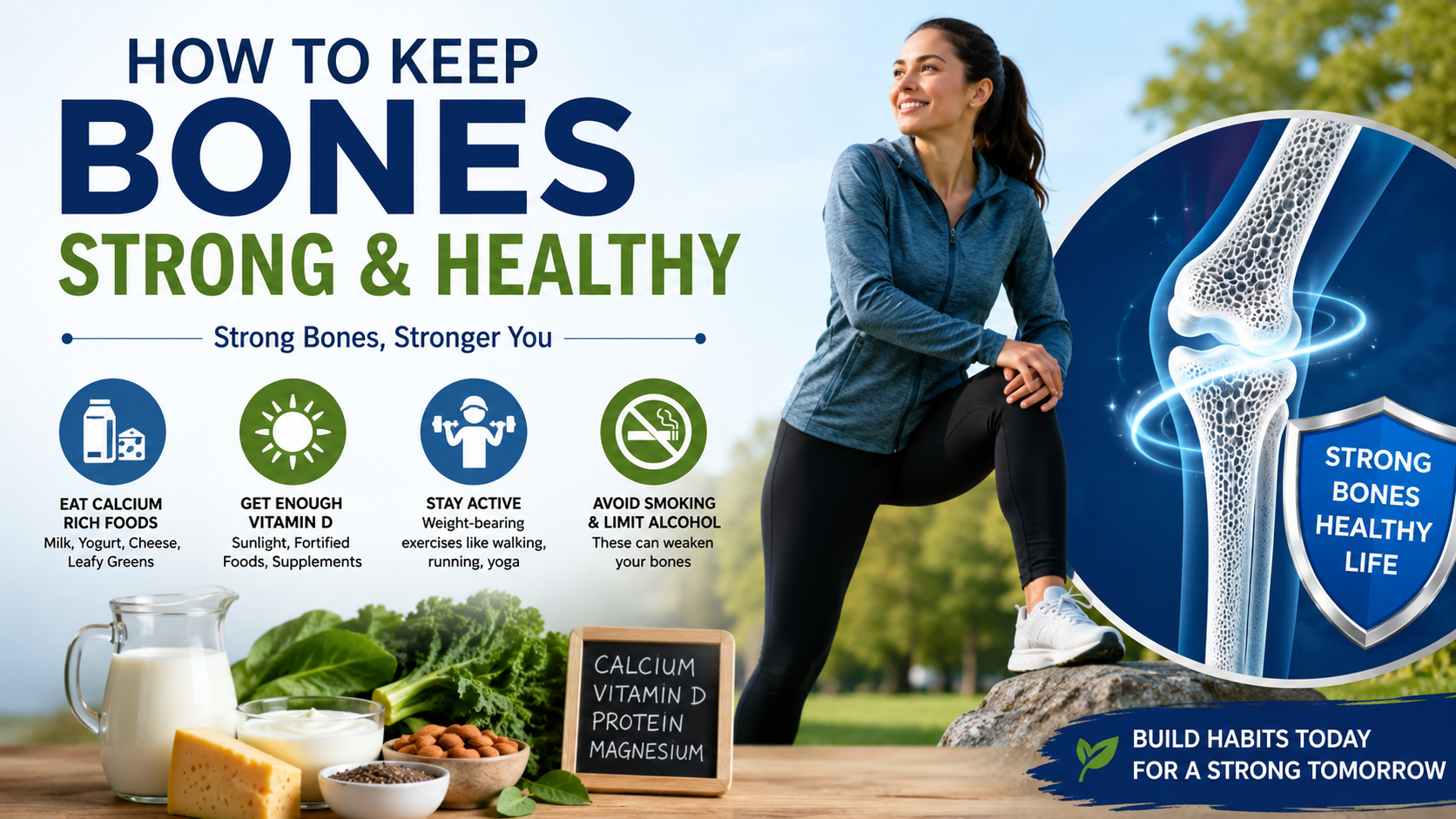
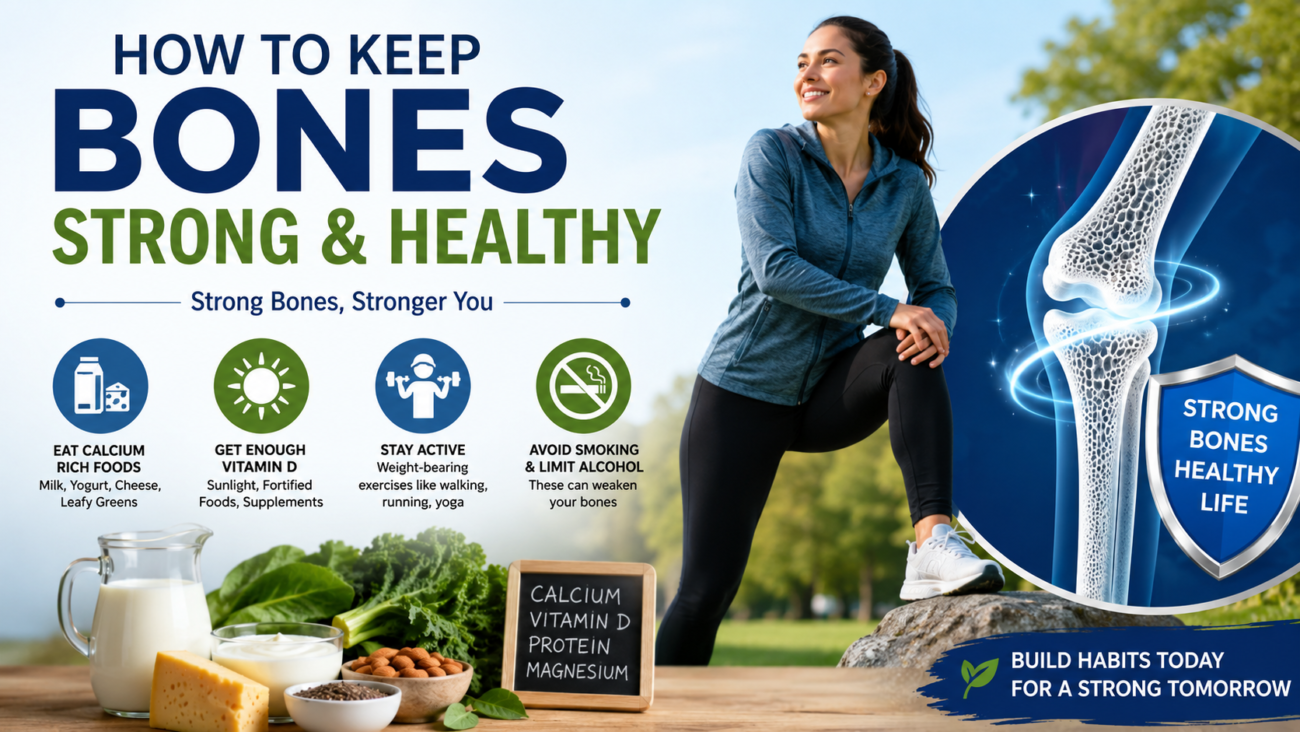
- Eat Calcium-Rich Foods Every Day
Calcium is the most important mineral for building and maintaining strong bones. Nearly 99% of the body’s calcium is stored in the bones and teeth. If you do not consume enough calcium, your body starts taking calcium from your bones, which can make them weak over time. To keep your bones healthy, include calcium-rich foods such as milk, yogurt, cheese, almonds, broccoli, and leafy green vegetables in your daily diet. Children, adults, and older people all need adequate calcium to maintain healthy bone density and reduce the risk of osteoporosis and fractures. - Get Enough Vitamin D
Vitamin D is essential because it helps the body absorb calcium effectively. Even if you eat calcium-rich foods, your body cannot use calcium properly without enough vitamin D. Spending time in sunlight is one of the best natural ways to get vitamin D. Foods such as salmon, tuna, egg yolks, and fortified dairy products also provide this important nutrient. Maintaining healthy vitamin D levels helps improve bone strength, supports healthy growth, and lowers the risk of bone diseases. - Exercise Regularly to Strengthen Bones
Physical activity is one of the best ways to improve bone health naturally. Weight-bearing exercises such as walking, jogging, dancing, hiking, and climbing stairs help stimulate bone growth and increase bone density. Strength training exercises also help build muscles that support and protect bones. Regular exercise improves balance and coordination, reducing the risk of falls and fractures. Making exercise a part of your daily routine can help keep your bones strong throughout your life. - Follow a Healthy and Balanced Diet
Bones need many nutrients besides calcium and vitamin D. A balanced diet provides essential nutrients such as magnesium, phosphorus, protein, potassium, and vitamin K, all of which contribute to healthy bone development. Fruits, vegetables, whole grains, lean proteins, and healthy fats should be included in your meals regularly. Eating a variety of nutritious foods helps maintain strong bones, supports overall health, and reduces the risk of nutritional deficiencies that may weaken bones. - Avoid Harmful Habits That Weaken Bones
Certain lifestyle habits can negatively affect bone health. Smoking can reduce bone density and make bones more likely to break. Excessive alcohol consumption can interfere with calcium absorption and slow down the body’s ability to build healthy bone tissue. Lack of physical activity and poor eating habits can also weaken bones over time. Avoiding these harmful habits and adopting a healthy lifestyle can help protect your bones and keep them strong as you age.
Strong Bones Naturally
Building strong bones naturally is important for maintaining good health and an active lifestyle. Bones provide support to the body, protect important organs, and help us move easily. Healthy habits such as eating nutritious foods, staying physically active, and getting enough sunlight can help improve bone strength naturally. Calcium-rich foods like milk, yogurt, cheese, almonds, and green vegetables play an important role in keeping bones healthy. Vitamin D from sunlight helps the body absorb calcium and supports bone growth.
Regular exercise, especially walking, jogging, and strength-training activities, helps increase bone density and keeps bones strong. Maintaining a healthy body weight, getting enough sleep, and avoiding harmful habits such as smoking and excessive alcohol consumption can also protect bone health. By following these simple daily habits, you can strengthen your bones naturally and reduce the risk of fractures, osteoporosis, and other bone-related problems in the future.
Calcium for Bone Health
Calcium is a very important mineral for the human body. It plays a key role in making bones and teeth strong and healthy. When the body gets enough calcium, bones stay strong and are less likely to break or become weak. Calcium is not only important for bones but also helps in proper muscle function, nerve signaling, and blood clotting.
If the body does not get enough calcium, bones can become weak and brittle. This may lead to pain in joints and bones. Long-term calcium deficiency can cause a serious condition called osteoporosis, in which bones become very fragile and can break easily even with small injuries. In children, a lack of calcium can slow down growth, while in adults and older people, it increases the risk of fractures.
Natural sources of calcium include milk, yogurt, cheese, almonds, sesame seeds, fish, and green leafy vegetables. Including these foods in the daily diet is very important to maintain healthy calcium levels in the body. Vitamin D is also essential because it helps the body absorb calcium properly. Getting a little sunlight daily can help improve Vitamin D levels.
Vitamin D Benefits for bones
Vitamin D is very important for bone health. It helps the body absorb calcium from food, which is necessary to keep bones strong and healthy. Without enough Vitamin D, the body cannot use calcium properly, even if you are eating calcium-rich foods.
When Vitamin D levels are low, bones can become weak and soft. In children, this condition is called rickets, which can cause bone deformities and slow growth. In adults, Vitamin D deficiency can lead to bone pain, muscle weakness, and a higher risk of fractures. Over time, it can also contribute to osteoporosis, a disease where bones become thin and fragile.
The main natural source of Vitamin D is sunlight. When skin is exposed to sunlight, the body produces Vitamin D naturally. Just 10–20 minutes of morning sunlight a few times a week can help maintain good levels. Vitamin D is also found in foods like egg yolks, fish (such as salmon and sardines), liver, and fortified milk or cereals.
Vitamin D works together with calcium to build and maintain strong bones. If either of them is low, bone health can be affected. That is why both nutrients are equally important in your daily diet.
Exercise for Bone health
Exercise is very important for bone health because it helps make bones strong, dense, and healthy. When we do physical activity, our bones get pressure and movement, which makes them stronger over time. Regular exercise also improves balance and reduces the risk of bone injuries and fractures.
Weight-bearing exercises are the best for bone strength. These include walking, jogging, running, dancing, and climbing stairs. These activities force your bones to work against gravity, which helps improve bone density. Even simple daily walking for 30 minutes can make a big difference in bone health.
Strength training exercises are also very useful. These include lifting light weights, using resistance bands, or doing bodyweight exercises like squats, push-ups, and lunges. These exercises strengthen not only bones but also muscles, which gives better support to the body and joints.
Yoga and stretching exercises help improve flexibility, balance, and posture. Good balance is important because it reduces the chances of falls, especially in older people, which helps prevent fractures.
Exercise also improves blood flow in the body, which helps deliver nutrients like calcium and oxygen to the bones. This supports bone repair and growth.
Bone strengthening Food
“Eating foods rich in calcium, vitamin D, and protein is essential for strong and healthy bones. Dairy products, green leafy vegetables, nuts, seeds, and fish help improve bone density and reduce the risk of bone weakness and fractures. A balanced diet combined with regular exercise is the best natural way to maintain lifelong bone strength.”
— Dr. John Smith, Orthopedic Specialist
Healthy Bones and Joints
Healthy bones and joints are very important for a strong and active life. Bones give structure to the body, while joints connect the bones and allow movement like walking, running, bending, and lifting. When bones and joints are healthy, a person can move easily without pain or stiffness.
To keep bones strong, the body needs proper nutrients like calcium, vitamin D, and protein. Calcium helps in building strong bones, while vitamin D helps the body absorb calcium properly. Protein also supports bone and muscle strength. Foods like milk, yogurt, cheese, eggs, fish, nuts, and green vegetables are very good for bone health.
Joints also need care and protection. Regular exercise keeps joints flexible and reduces stiffness. Activities like walking, stretching, yoga, and light strength training help improve joint movement and reduce pain. Staying active also improves blood flow, which keeps joints healthy.
Healthy body weight is also important because extra weight puts pressure on joints, especially knees and hips. Maintaining a balanced diet and avoiding junk food helps reduce this pressure.