Blog
Early Warning Signs of high Cholesterol You should Never Ignore

Introduction
High cholesterol is one of the most common health problems worldwide. The dangerous thing about high cholesterol is that it often develops silently without causing obvious symptoms. Many people do not know they have high cholesterol until it leads to serious health problems such as heart disease, stroke, or blocked arteries.
Understanding the early warning signs of high cholesterol can help you take action before complications develop. In this article, we will discuss the symptoms, causes, risk factors, and ways to manage high cholesterol naturally and medically.
What Is High Cholesterol and Why Is It Dangerous?
Cholesterol is a waxy, fat-like substance found in your blood. Your body needs some cholesterol to build healthy cells and produce hormones. However, when cholesterol levels become too high, it can build up inside the arteries.
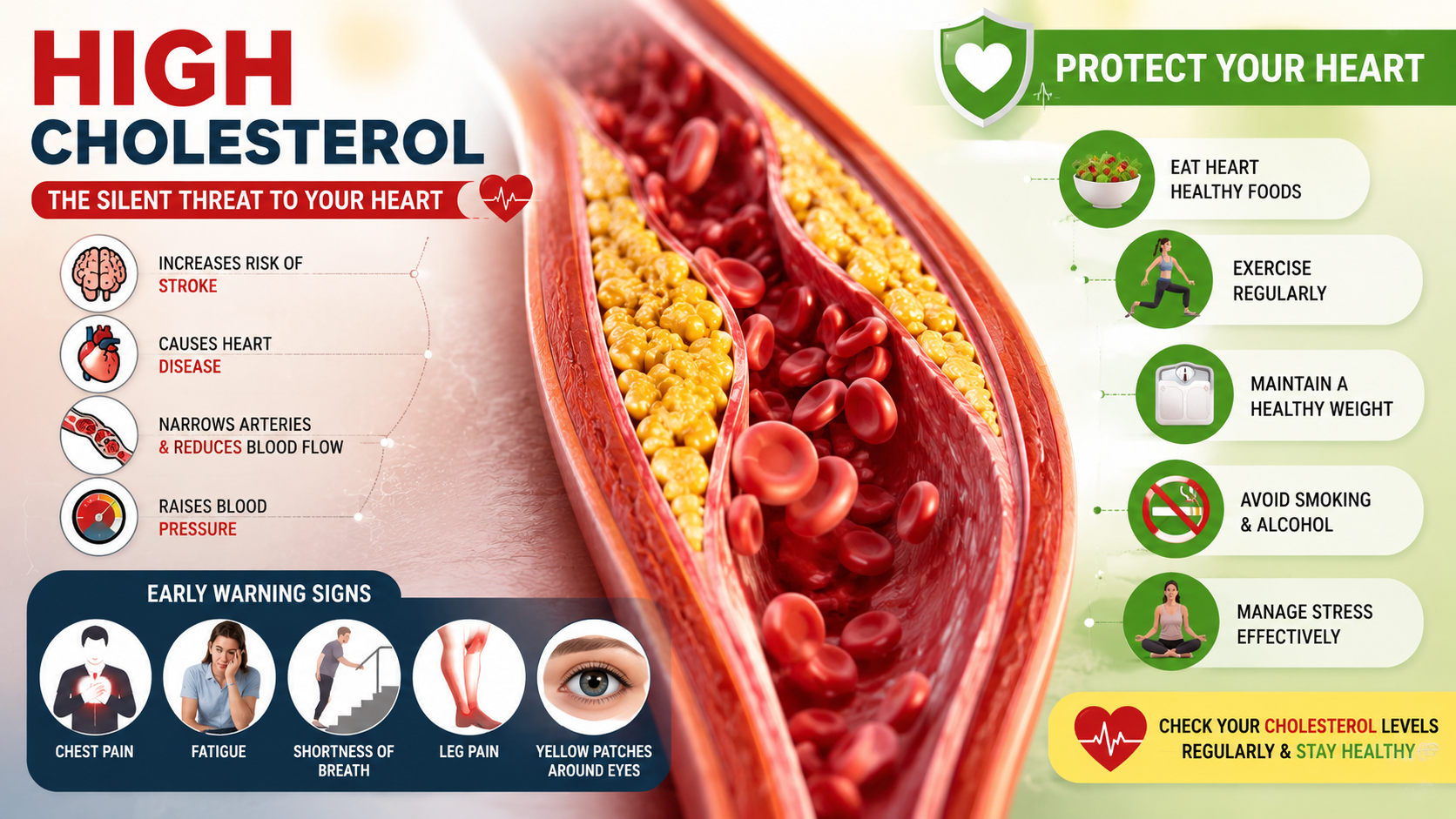
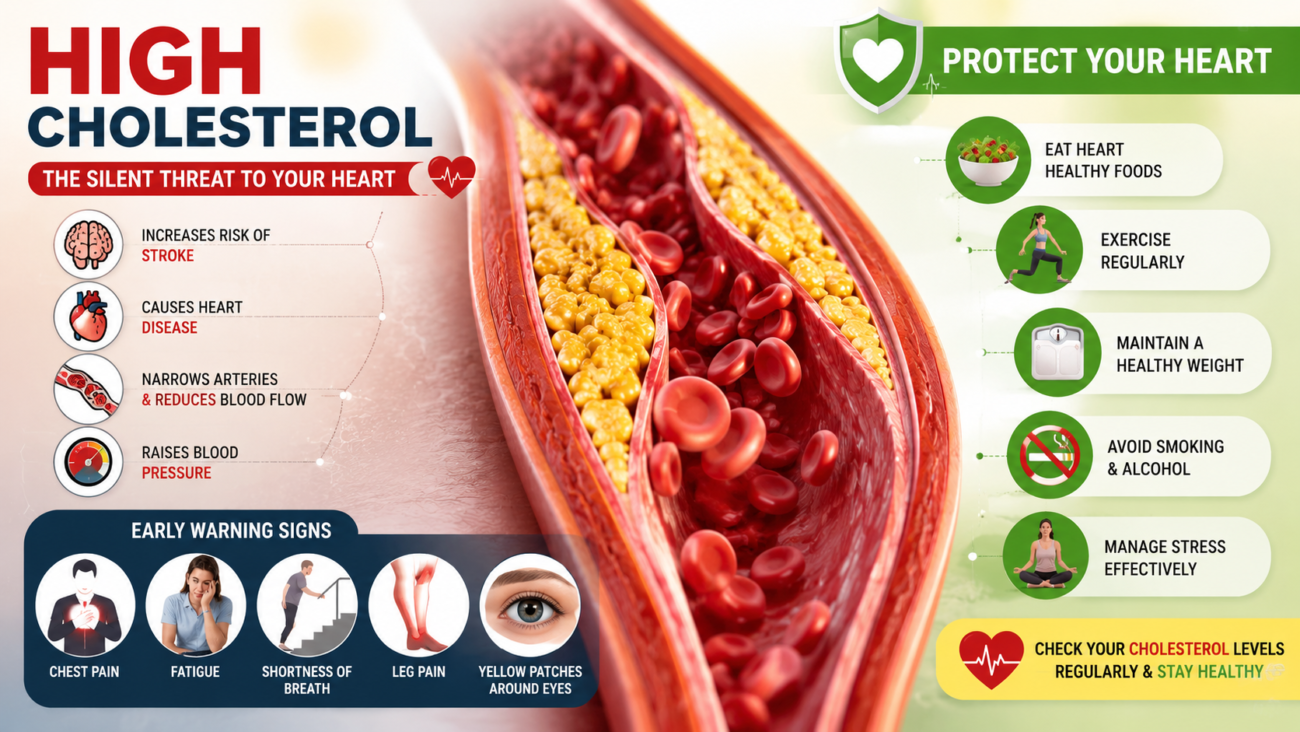
Over time, these deposits can narrow blood vessels and reduce blood flow to important organs such as the heart and brain. This increases the risk of heart attack, stroke, and other cardiovascular diseases.
There are two main types of cholesterol:
LDL (Low-Density Lipoprotein) is often called “bad cholesterol” because it can build up in the arteries.
HDL (High-Density Lipoprotein) is known as “good cholesterol” because it helps remove excess cholesterol from the bloodstream.
Why High Cholesterol Is Known as a Silent Health Problem
Many people search for “high cholesterol symptoms” because they want to know how to recognize the condition. The truth is that high cholesterol usually does not cause noticeable symptoms in its early stages.
This is why doctors often call it a silent disease. A person may feel completely healthy while cholesterol levels continue to rise. However, as cholesterol starts affecting blood circulation, certain warning signs may begin to appear.
Chest Pain or Discomfort
One of the most important warning signs of high cholesterol is chest pain, also known as angina. When cholesterol builds up in the arteries supplying blood to the heart, blood flow becomes restricted.
As a result, you may experience pressure, tightness, heaviness, or pain in the chest, especially during physical activity or emotional stress. This symptom should never be ignored because it may indicate underlying heart disease.
Shortness of Breath During Daily Activities
If you find yourself becoming breathless while climbing stairs, walking short distances, or performing routine tasks, high cholesterol may be affecting your circulation.
Blocked or narrowed arteries can reduce oxygen delivery throughout the body, making the heart work harder. Shortness of breath may be an early sign that cholesterol is beginning to impact cardiovascular health.
Frequent Fatigue and Low Energy Levels
Many people with high cholesterol report feeling unusually tired even after getting enough sleep. Poor blood circulation caused by cholesterol buildup can reduce the supply of oxygen and nutrients to muscles and organs.
As a result, you may experience constant fatigue, weakness, and reduced energy levels throughout the day.
Pain, Cramping, or Numbness in the Legs
High cholesterol can affect blood flow to the legs and feet. This condition is known as peripheral artery disease (PAD).
People with PAD often experience leg pain, muscle cramps, numbness, or discomfort while walking. The symptoms may improve with rest but return during physical activity. Persistent leg pain should always be evaluated by a healthcare professional.
Yellowish Deposits Around the Eyes
One visible sign of high cholesterol is the appearance of yellowish fatty deposits around the eyelids. These deposits are called xanthelasma.
Although xanthelasma itself is usually harmless, it may indicate elevated cholesterol levels in the blood. People who notice these yellow patches should consider having their cholesterol checked.
Small Bumps on the Skin
In some cases, excess cholesterol can form fatty deposits beneath the skin. These bumps may appear on the hands, elbows, knees, or other areas of the body.
These deposits, known as xanthomas, are more common in people with very high cholesterol levels and should not be ignored.
High Blood Pressure Can Be a Warning Sign
High cholesterol and high blood pressure often occur together. When cholesterol narrows the arteries, the heart must pump harder to move blood through the body.
This increased pressure can contribute to hypertension. If you have high blood pressure, your doctor may also recommend checking your cholesterol levels regularly.
Family History of High Cholesterol
Sometimes high cholesterol is inherited. A condition called familial hypercholesterolemia can cause cholesterol levels to become extremely high even in young adults and children.
If close family members have high cholesterol, heart disease, or have experienced heart attacks at a young age, your risk may be significantly higher.
Common Causes of High Cholesterol
Several lifestyle and health factors can increase cholesterol levels.
Eating foods high in saturated fats and trans fats is one of the leading causes. Lack of physical activity, obesity, smoking, and excessive alcohol consumption can also contribute.
Certain medical conditions such as diabetes, hypothyroidism, kidney disease, and liver disorders may increase cholesterol levels as well.
Who Is at Higher Risk of Developing High Cholesterol?
Anyone can develop high cholesterol, but some people face a greater risk.
Risk factors include:
⦁ Being overweight or obese
⦁ Having diabetes
⦁ Smoking cigarettes
⦁ Eating an unhealthy diet
⦁ Living a physically inactive lifestyle
⦁ Being over 40 years of age
⦁ Having a family history of heart disease
⦁ Experiencing chronic stress
Understanding these risk factors can help you take preventive steps before serious complications occur.
How to Lower High Cholesterol Naturally
Many people search for natural ways to lower cholesterol. Fortunately, lifestyle changes can significantly improve cholesterol levels.
Eating more fruits, vegetables, whole grains, nuts, and healthy fats can support heart health. Foods rich in omega-3 fatty acids, such as fish, may also help improve cholesterol balance.
Regular exercise is equally important. Walking, cycling, swimming, and other physical activities can increase good cholesterol while reducing bad cholesterol.
Maintaining a healthy weight, avoiding smoking, and limiting processed foods can further reduce cholesterol levels naturally.
Medical Treatments for High Cholesterol
In some cases, lifestyle changes alone may not be enough. Doctors may prescribe cholesterol-lowering medications such as statins.
These medications help reduce LDL cholesterol and lower the risk of heart attack and stroke. Treatment recommendations depend on cholesterol levels, age, family history, and overall cardiovascular risk.
Always follow your healthcare provider’s advice regarding medication and regular monitoring.
When Should You See a Doctor?
You should consider seeing a doctor if you experience chest pain, unexplained fatigue, shortness of breath, leg pain during walking, or visible yellow deposits around the eyes.
Even if you have no symptoms, regular cholesterol screening is important, especially if you have risk factors such as obesity, diabetes, or a family history of heart disease.
Early detection allows for timely treatment and helps prevent serious health complications.
Final Thoughts
High cholesterol is often called a silent killer because it may not cause symptoms until significant damage has already occurred. However, warning signs such as chest pain, fatigue, shortness of breath, leg cramps, and yellow deposits around the eyes can indicate that cholesterol levels are affecting your health.
The good news is that high cholesterol can often be managed through healthy eating, regular exercise, weight control, and medical treatment when necessary. Paying attention to these early warning signs and getting regular cholesterol tests can protect your heart and improve your long-term health. By taking action early, you can reduce your risk of heart disease, stroke, and other serious complications.