

Blog
How to build a Healthy Morning Routine

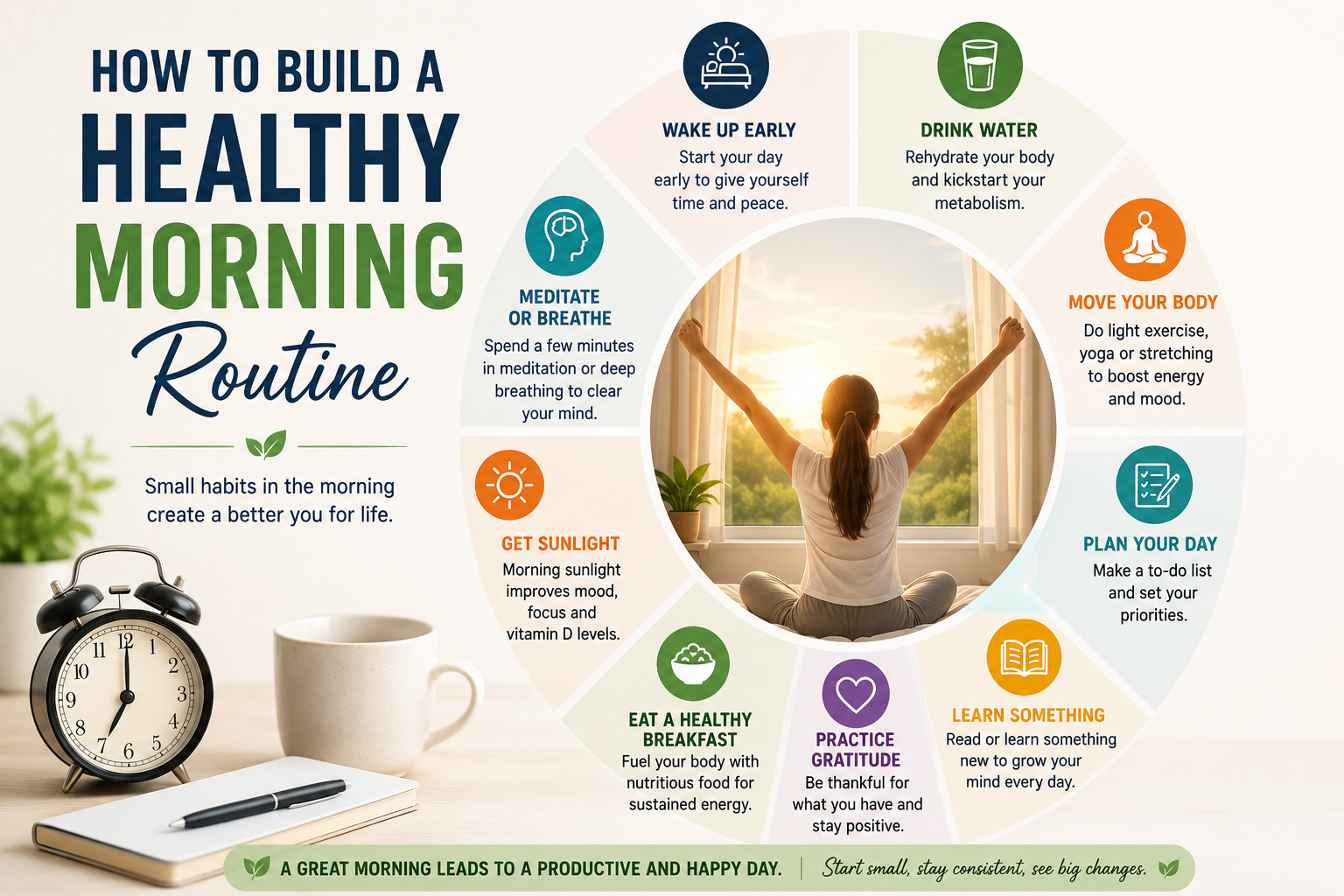
A healthy morning routine can shape the rest of your day.
The choices you make during the first hour after waking up can influence your energy, mood,focus and overall health. Many people struggle with feeling tired, stressed, or rushed in the morning, but even a few simple habits can make a noticeable difference.
Learning how to build a healthy morning routine does not mean waking up at 5 a.m. or following a perfect schedule. Instead, it is about creating realistic habits that fit your lifestyle and help you feel your best. Whether you are a student, a working professional, or a busy parent, a consistent morning routine can improve both your physical and mental well-being.
In this guide, you will discover practical steps to build a morning routine that is easy to follow, enjoyable, and sustainable.
Why Is a Healthy Morning Routine Important?
A good morning routine prepares your body and mind for the day ahead. Instead of starting your morning with stress and distractions, healthy habits help you feel more organized, calm, and energized.
Some of the benefits include:
Increased energy throughout the day
Better concentration and productivity
Improved mood and reduced stress
Healthier eating habits
Better sleep quality over time
Stronger physical and mental well-being
Small, consistent actions often have a greater long-term impact than making dramatic lifestyle changes all at once.
Start with a Consistent Wake-Up Time
One of the most effective ways to build a healthy morning routine is to wake up at the same time every day, including weekends whenever possible.
A consistent sleep schedule helps regulate your body’s internal clock, making it easier to wake up feeling refreshed. It can also improve sleep quality and support healthy hormone regulation.
If you want to wake up earlier, avoid making large changes overnight. Instead, adjust your wake-up time by 15 to 20 minutes every few days until you reach your goal.
For better mornings:
Aim for 7–9 hours of sleep each night.
Avoid staying up late unnecessarily.
Keep your bedroom cool, dark, and quiet.
Limit screen time before bed.
Hydrate Your Body Before Anything Else
After several hours of sleep, your body naturally loses water through breathing and sweating. Drinking a glass of water soon after waking helps replace those fluids and supports normal body functions.
Staying hydrated may help improve alertness and concentration while supporting digestion and overall health.
You can make hydration a daily habit by:
Keeping a glass or bottle of water near your bed.
Drinking water before tea or coffee.
Adding a slice of lemon or cucumber if you enjoy extra flavor.
Continuing to drink water regularly throughout the day.
Remember that coffee and tea can still be part of a healthy lifestyle, but starting with water first is a simple habit that many people find beneficial.
Move Your Body to Wake Up Naturally
You do not need an intense workout every morning to feel the benefits of movement. Even five to fifteen minutes of gentle activity can help you feel more awake and ready for the day.
Consider activities such as:
Light Stretching
Stretching can help reduce morning stiffness and improve flexibility. Gentle neck, shoulder, back, and leg stretches are a good place to begin.
Walking
A short walk outdoors provides light physical activity and exposes you to natural daylight, which helps support your body’s sleep-wake cycle.
Yoga
Yoga combines movement with breathing exercises and may help reduce stress while improving balance and flexibility.
Strength Exercises
Simple bodyweight exercises such as squats, push-ups, or lunges can help build strength and increase energy without requiring gym equipment.
Choose activities that you enjoy, as consistency is more important than intensity.
Eat a Nutritious Breakfast to Fuel Your Day
A healthy breakfast gives your body the energy and nutrients it needs after an overnight fast. While some people prefer different eating schedules, many find that a balanced breakfast helps them stay focused, manage hunger, and maintain steady energy levels throughout the morning.
Instead of choosing sugary cereals or pastries, try to include a mix of protein, fiber, healthy fats, and complex carbohydrates.
Healthy breakfast ideas include:
Oatmeal topped with fresh berries and nuts
Whole-grain toast with eggs and avocado
Greek yogurt with fruit and chia seeds
A smoothie made with spinach, banana, berries, and milk or yogurt
Cottage cheese with sliced fruit and seeds
Preparing breakfast the night before can save time and make healthy choices easier on busy mornings.
Practice Mindfulness Before Starting Your Day
Many people begin their mornings by checking emails or scrolling through social media. While this may seem harmless, it can quickly increase stress and distract you before your day has even begun.
Taking just a few minutes for mindfulness can help you start the day with a calm and focused mindset.
Simple mindfulness activities include:
Deep Breathing
Spend two to five minutes taking slow, deep breaths. This can help you relax and prepare mentally for the day ahead.
Meditation
A short guided meditation may improve focus and reduce feelings of stress. Even five minutes can make a difference when practiced regularly.
Gratitude Practice
Write down three things you are grateful for each morning. This simple habit can encourage a more positive outlook and help you appreciate the good things in your life.
Journaling
Writing your thoughts, goals, or plans for the day can clear your mind and improve organization.
Spend a Few Minutes Planning Your Day
A successful morning routine is not only about physical health. It is also about preparing yourself mentally for the day’s responsibilities.
Before you begin work or other daily tasks, take a few minutes to review your schedule.
Ask yourself:
What are my three most important tasks today?
Are there any appointments I need to remember?
What challenges might I face today
How can I stay productive without feeling overwhelmed?
Keeping a planner or digital calendar can help you stay organized and reduce unnecessary stress.
Get Some Natural Sunlight Early in the Morning
Exposure to natural daylight soon after waking helps support your body’s internal clock, also known as the circadian rhythm.
Morning sunlight may help you feel more awake during the day and support healthy sleep at night.
Simple ways to get more sunlight include:
Open your curtains as soon as you wake up.
Eat breakfast near a window.
Take a short walk outside.
Spend a few minutes in your garden or on your balcony.
Even 10 to 20 minutes of morning sunlight can become a valuable part of your daily wellness routine.
Avoid Common Morning Routine Mistakes
Building healthy habits is just as much about avoiding unhealthy ones.
Here are some common mistakes that can affect your energy and productivity:
Hitting the Snooze Button Repeatedly
Repeatedly going back to sleep can leave you feeling more tired instead of refreshed. Try placing your alarm across the room to encourage yourself to get up.
Checking Your Phone Immediately
Starting the day with notifications and social media can increase stress and reduce focus. Consider waiting until after you’ve completed your essential morning habits.
Skipping Breakfast Without a Plan
If you choose to skip breakfast, make sure your overall eating pattern still meets your nutritional needs. If you do eat breakfast, aim for balanced, nutrient-rich foods rather than highly processed options.
Rushing Through Your Morning
Leaving everything until the last minute often creates unnecessary stress. Preparing your clothes, meals, or work materials the night before can make your mornings much smoother.
Drinking Too Much Caffeine
Coffee can be part of a healthy routine for many people, but too much caffeine may lead to jitters, anxiety, or trouble sleeping. Enjoy it in moderation and remember to stay hydrated throughout the day.
Build a Morning Routine That Fits Your Lifestyle
There is no perfect morning routine that works for everyone. The best routine is one that matches your schedule, goals, and personal preferences.
If you are just getting started, focus on adding one new healthy habit each week instead of changing everything at once.
For example:
Week 1: Wake up at the same time every day.
Week 2: Drink a glass of water after waking.
Week 3: Add five to ten minutes of stretching.
Week 4: Prepare a healthy breakfast.
Week 5: Practice mindfulness for five minutes.
Building habits gradually makes them easier to maintain over the long term.
A Simple Healthy Morning Routine Example
If you are unsure where to begin, this sample routine can serve as inspiration:
Wake up at the same time each day.
Drink one glass of water.
Open the curtains and enjoy natural sunlight.
Stretch or walk for 10 to 15 minutes.
Practice deep breathing or meditation for five minutes.
Eat a healthy breakfast.
Review your daily goals and priorities.
Start work or daily activities with a positive mindset.
Remember, your routine does not have to be perfect. Consistency is far more important than doing everything exactly the same every day.
When Should You Seek Professional Advice?
A healthy morning routine can improve your overall well-being, but it is not a cure for medical conditions. If you regularly wake up feeling exhausted despite getting enough sleep, or if you experience ongoing fatigue, dizziness, severe stress, or mood changes that interfere with daily life, it is important to speak with a healthcare professional.
You should also seek medical advice if you have persistent sleep problems, loud snoring, frequent pauses in breathing during sleep, or symptoms that could indicate an underlying health condition. A doctor can help identify the cause and recommend the most appropriate treatment.
If you have a chronic medical condition such as diabetes, high blood pressure, heart disease, or another long-term illness, talk to your healthcare provider before making major changes to your diet, exercise routine, or daily schedule.
Healthy Morning Routine Checklist
- Use this simple checklist to build healthy habits one step at a time:
- Wake up at the same time every day.
- Drink a glass of water after waking.
- Open the curtains or spend a few minutes in natural sunlight.
- Stretch, walk, or exercise for at least 10–20 minutes.
- Practice deep breathing, meditation, or gratitude.
- Eat a balanced and nutritious breakfast if it fits your eating pattern.
- Plan your most important tasks for the day.
- Avoid checking your phone immediately after waking.
- Stay positive and focus on consistency rather than perfection.
Conclusion
Learning how to build a healthy morning routine does not require a perfect schedule or expensive wellness products.
The most effective routines are built on simple habits that are realistic and easy to maintain.
By waking up consistently staying hydrated moving your body eating nutritious foods, practicing mindfulness and planning your day you can create mornings that support better physical health mental well-being and productivity.
Remember that lasting change takes time. Start with one or two healthy habits, practice them consistently and gradually build your routine as they become part of your daily life. Small improvements made every morning can lead to meaningful health benefits over time.
Frequently Asked Questions (FAQs)
1. What is the best healthy morning routine?
A healthy morning routine usually includes waking up at the same time each day, drinking water, getting natural sunlight, moving your body, eating a balanced breakfast if appropriate for you, and taking a few minutes to plan your day. The best routine is one that you can follow consistently.
2. How long should a morning routine be?
A morning routine does not need to be long to be effective. Many people can complete a beneficial routine in 20 to 45 minutes. Even spending 10 to 15 minutes on healthy habits is better than having no routine at all.
3. Is it necessary to wake up at 5 a.m. to be healthy?
No. There is no specific wake-up time that works for everyone. The most important factor is getting enough quality sleep and maintaining a consistent sleep schedule that fits your lifestyle and responsibilities.
4. Should I drink water before coffee in the morning?
Drinking water after waking is a simple way to rehydrate your body after several hours of sleep. Many people find it helpful to have a glass of water before enjoying coffee or tea.
5. Is breakfast the most important meal of the day?
Breakfast can be an important meal for many people because it provides energy and nutrients. However, nutritional needs vary, and some healthy eating patterns may not include breakfast. Choose an approach that fits your health goals and discuss any concerns with a healthcare professional if needed.
6. What exercises are best in the morning?
Light stretching, yoga, walking, cycling, and bodyweight exercises are all excellent choices. The best exercise is one you enjoy and can perform regularly.
7. How can I stay consistent with my morning routine?
Start with one habit at a time, keep your goals realistic, prepare the night before, and focus on progress rather than perfection. Consistency is built through small daily actions.
8. What should I avoid first thing in the morning?
Try to avoid repeatedly hitting the snooze button, checking social media immediately after waking, skipping hydration, and rushing through your morning without a plan.
9. Can a healthy morning routine improve mental health?
Healthy morning habits such as regular sleep, physical activity, mindfulness, and planning your day may help reduce stress and improve overall well-being. However, they are not a substitute for professional mental health care when it is needed.
10. How long does it take to build a healthy morning routine?
The time varies from person to person. Many people notice improvements within a few weeks of consistent practice, while making a habit part of daily life may take longer. The key is to stay patient and make gradual changes.
Educational Disclaimer
This article is intended for educational and informational purposes only. It should not be considered medical advice, diagnosis, or treatment. Health information can vary based on individual circumstances. Always consult a qualified healthcare professional before making significant changes to your diet, exercise routine, or lifestyle, especially if you have an existing medical condition or ongoing symptoms.