

Blog
How to Improve Digestion Naturally

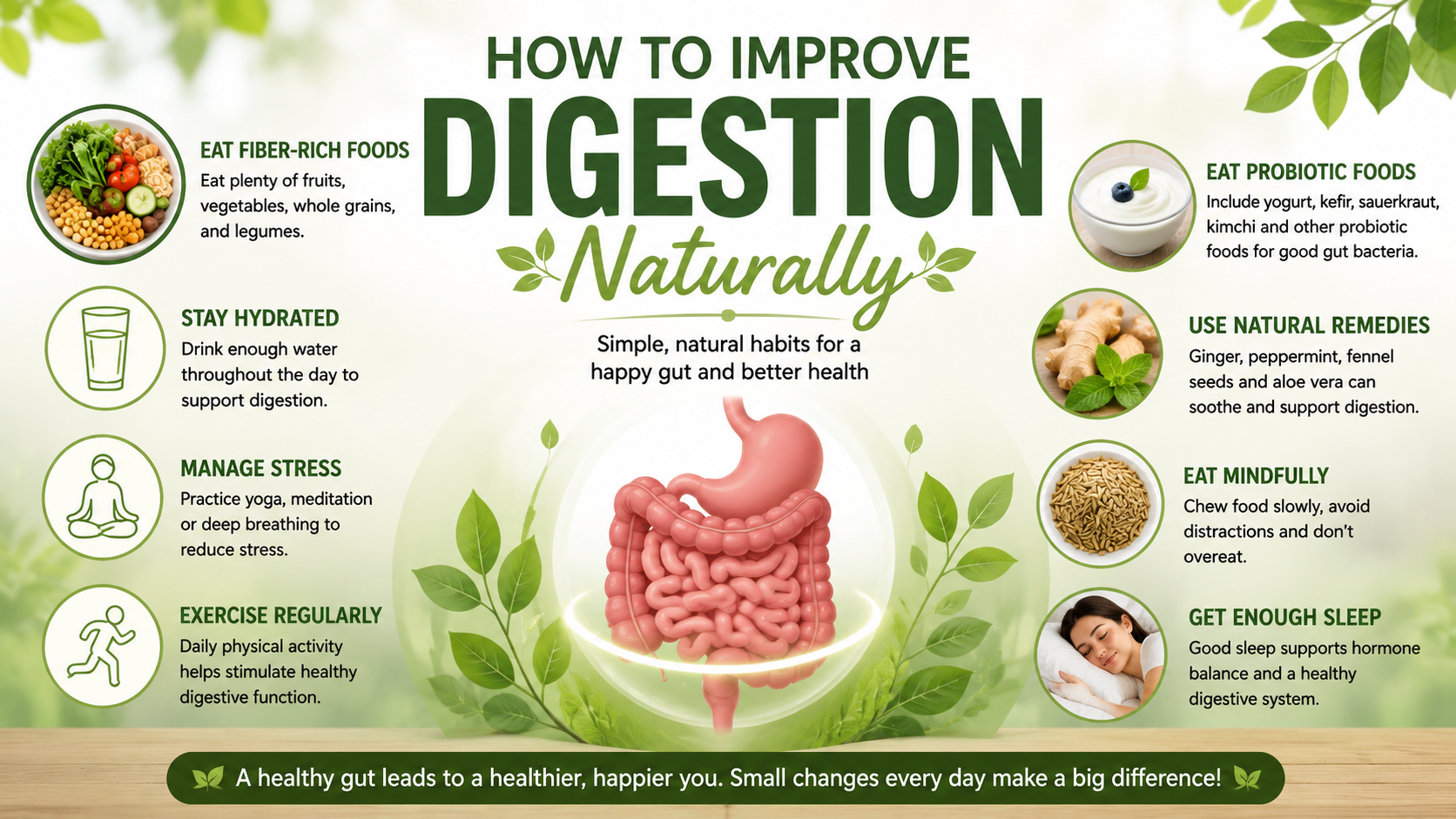
A healthy digestive system is one of the most important parts of overall well-being.
Your digestive system is responsible for breaking down the food you eat, absorbing essential nutrients, and removing waste from the body.
When digestion works properly, you feel energetic, comfortable, and healthier.
However, many people struggle with digestive issues like bloating, constipation, gas, stomach discomfort, acid reflux, and indigestion because of unhealthy eating habits, stress, lack of exercise, and poor lifestyle choices.
If you have ever wondered how to improve digestion naturally, you’re not alone.
Millions of people search for safe and natural ways to support their digestive health without depending on medications. The good news is that improving digestion doesn’t always require expensive treatments.
Small daily habits—such as eating nutritious foods, drinking enough water, managing stress, and staying physically active—can make a remarkable difference.
This complete guide explains how to improve digestion naturally using practical, science-backed lifestyle changes.
By following these tips consistently, you can support your digestive system, improve nutrient absorption, reduce digestive discomfort, and enjoy better overall health.
Why Is Healthy Digestion Important?
Digestion is much more than simply breaking down food. It is a complex process that allows your body to absorb vitamins, minerals, proteins, healthy fats, and carbohydrates that keep every organ functioning properly. Without healthy digestion, even the healthiest diet cannot provide maximum benefits because nutrients may not be absorbed efficiently.
A healthy digestive system also supports:
Better energy levels
Strong immune function
Healthy gut bacteria
Weight management
Improved mental well-being
Regular bowel movements
Better nutrient absorption
Poor digestion, on the other hand, may lead to fatigue, nutrient deficiencies, stomach pain, bloating, constipation, diarrhea, and frequent discomfort after meals. Understanding how to improve digestion naturally is one of the best investments you can make for your long-term health.
Common Signs of Poor Digestion
Everyone experiences occasional digestive discomfort, but persistent symptoms may indicate that your digestive system needs more attention. Recognizing these warning signs early allows you to make healthier lifestyle changes before problems become more serious.
Frequent Bloating
Bloating is one of the most common digestive complaints. It often feels like tightness, fullness, or swelling in the stomach after eating. While occasional bloating is normal, experiencing it regularly may suggest that your digestive system is not processing food efficiently.
Common causes include:
Eating too quickly
Overeating
Drinking carbonated beverages
Consuming highly processed foods
Food intolerances
Poor gut bacteria balance
Learning how to improve digestion naturally can help reduce bloating by improving the way your body processes food. Eating slowly, choosing whole foods, and drinking enough water are simple habits that often provide noticeable relief.
Constipation
Constipation occurs when bowel movements become infrequent or difficult to pass. It can cause abdominal discomfort, bloating, and a feeling that the bowels are not completely empty.
Several lifestyle factors contribute to constipation, including:
Low fiber intake
Not drinking enough water
Physical inactivity
Ignoring the urge to use the bathroom
Poor eating habits
One of the easiest ways to improve digestion naturally is by increasing fiber-rich foods such as vegetables, fruits, legumes, oats, and whole grains while staying well hydrated. Regular physical activity also helps stimulate normal bowel movements.
Excessive Gas and Indigestion
Gas is a natural part of digestion, but excessive gas, frequent burping, and indigestion may indicate that your digestive system is struggling to break down certain foods properly.
Common triggers include:
Swallowing excess air while eating
Eating too fast
High-fat meals
Sugary drinks
Food intolerances
Poor gut health
Improving your eating habits and avoiding foods that trigger discomfort can significantly improve digestion naturally over time.
Acid Reflux and Heartburn
Acid reflux occurs when stomach acid flows back into the esophagus, causing a burning sensation in the chest known as heartburn. Occasional heartburn is common, but frequent episodes may affect daily life and require medical evaluation.
Some common triggers include:
Large meals
Fried foods
Spicy foods
Eating before bedtime
Obesity
Smoking
Maintaining a healthy weight, eating smaller meals, and avoiding lying down immediately after eating are simple strategies that may help reduce symptoms while supporting healthy digestion.
Eat More Fiber-Rich Foods
One of the most effective answers to how to improve digestion naturally is increasing your daily fiber intake. Dietary fiber supports almost every aspect of digestive health by promoting regular bowel movements, feeding beneficial gut bacteria, and helping waste move smoothly through the digestive tract.
Fiber also helps you feel full longer, supports healthy cholesterol levels, and contributes to better blood sugar control.
Soluble Fiber
Soluble fiber dissolves in water and forms a gel-like substance inside the digestive tract. This slows digestion in a healthy way and helps your body absorb nutrients more effectively.
Excellent sources include:
Oats
Apples
Pears
Citrus fruits
Carrots
Beans
Lentils
Including soluble fiber in your meals can reduce digestive discomfort while supporting healthy gut bacteria.
Insoluble Fiber
Insoluble fiber adds bulk to stool and helps food move efficiently through the intestines. This type of fiber is especially helpful for preventing constipation.
Good sources include:
Whole wheat
Brown rice
Broccoli
Leafy green vegetables
Nuts
Seeds
Cauliflower
When increasing fiber intake, do so gradually and drink plenty of water to avoid temporary bloating or discomfort.
A balanced diet that contains both soluble and insoluble fiber is one of the best long-term strategies for anyone looking to learn how to improve digestion naturally.
Exercise Regularly for Better Digestion
Regular physical activity is not only important for your heart and muscles but also plays a major role in maintaining a healthy digestive system. Exercise stimulates the muscles of the digestive tract, allowing food to move more efficiently through the intestines. This can help reduce constipation, bloating, and sluggish digestion.
If you’re looking for how to improve digestion naturally, adding regular movement to your daily routine is one of the most effective lifestyle changes you can make.
How Exercise Helps Your Digestive System
Exercise improves blood circulation throughout the body, including the digestive organs. Better blood flow allows the digestive system to function more efficiently and supports the natural movement of food through the intestines.
Regular exercise can:
Stimulate healthy bowel movements.
Reduce constipation.
Minimize bloating after meals.
Improve metabolism.
Support a healthy weight.
Lower the risk of digestive disorders.
Enhance overall gut health.
Even simple activities can make a noticeable difference when practiced consistently.
Best Exercises for Healthy Digestion
You don’t have to spend hours in the gym to improve your digestive health. Moderate physical activity is usually enough.
Some of the best exercises include:
Walking
Walking is one of the easiest and safest ways to improve digestion naturally. A 20–30 minute walk after meals encourages food to move through the digestive tract while reducing bloating and gas.
Yoga
Certain yoga poses gently massage the abdominal organs and may help relieve digestive discomfort. Yoga also reduces stress, which positively affects digestion.
Cycling
Cycling promotes blood circulation and helps stimulate intestinal movement, supporting smoother digestion.
Swimming
Swimming provides a full-body workout that supports healthy metabolism and overall digestive function without placing stress on the joints.
Light Strength Training
Strength exercises improve overall fitness and help maintain a healthy body weight, reducing the risk of digestive problems linked to obesity.
Should You Exercise Immediately After Eating?
Light activity, such as a gentle walk, is generally beneficial after meals. However, intense workouts should be avoided immediately after eating because they may cause stomach discomfort or indigestion.
Waiting about one to two hours after a large meal before performing vigorous exercise allows your body to digest food more comfortably.
Reduce Stress to Improve Digestion Naturally
Many people don’t realize that stress can significantly affect digestive health. The brain and digestive system are closely connected through what’s known as the gut-brain connection. When you’re under constant stress, your digestive system may not function as efficiently.
Stress can contribute to:
Stomach pain.
Bloating.
Indigestion.
Loss of appetite.
Overeating.
Constipation.
Diarrhea.
Acid reflux.
Learning how to manage stress is an important step in understanding how to improve digestion naturally.
How Stress Affects Your Digestive System
During stressful situations, your body releases hormones such as cortisol and adrenaline. These hormones prepare your body to respond to danger, but they can also slow normal digestion.
Long-term stress may:
Slow the movement of food through the intestines.
Increase stomach acid production.
Disrupt the balance of healthy gut bacteria.
Trigger digestive discomfort after meals.
Worsen existing digestive conditions.
Reducing stress not only benefits your mental health but also helps your digestive system work more effectively.
H3: Simple Ways to Reduce Daily Stress
Managing stress doesn’t have to be complicated. Small daily habits can make a significant difference over time.
Try these techniques:
Practice deep breathing for 5,10 minutes each day.
Spend time outdoors in fresh air.
Listen to calming music.
Read a book before bedtime.
Maintain a consistent sleep schedule.
Spend time with family and friends.
Limit excessive screen time.
Keep a gratitude journal.
These simple practices help calm the nervous system and support healthy digestion.
Why Quality Sleep Matters
Sleep and digestion are closely connected. Poor sleep may disrupt digestive hormones, increase stress levels, and contribute to unhealthy eating habits.
Adults should aim for approximately 7–9 hours of quality sleep each night. Good sleep supports:
Healthy metabolism.
Better digestion.
Hormonal balance.
Reduced stress.
Improved gut health.
Creating a relaxing bedtime routine and maintaining consistent sleep hours can naturally improve both digestion and overall well-being.
Foods to Avoid for Better Digestion
While eating nutritious foods is essential, limiting foods that irritate the digestive system is equally important. Certain foods can slow digestion, increase inflammation, or cause symptoms such as bloating, gas, and acid reflux.
If your goal is how to improve digestion naturally, paying attention to what you should avoid is just as valuable as knowing what to eat.
Highly Processed Foods
Processed foods often contain unhealthy fats, excess sodium, artificial additives, and very little fiber. Regular consumption may negatively affect gut bacteria and slow digestion.
Examples include:
Packaged snacks.
Instant noodles.
Processed meats.
Fast food.
Frozen ready-made meals.
Replacing processed foods with whole, nutrient-rich foods supports a healthier digestive system.
Fried and Fatty Foods
Fried foods are often difficult to digest because they contain large amounts of unhealthy fats. Eating them frequently may increase bloating, indigestion, and acid reflux.
Try choosing healthier cooking methods instead, such as:
Baking.
Grilling.
Steaming.
Boiling.
Air frying with minimal oil.
Sugary Drinks and Excess Sugar
Drinks high in added sugar may upset the balance of healthy gut bacteria and contribute to digestive discomfort.
Limit:
Soft drinks.
Sweetened fruit juices.
Energy drinks.
Sweetened iced teas.
High-sugar desserts.
Instead, choose water, herbal teas, or naturally flavored water to stay hydrated while supporting better digestion.
H2: Build Healthy Daily Habits for Long-Term Digestive Health
Improving digestion isn’t about following a strict diet for a few days. Instead, it requires building healthy habits that support your digestive system every single day. Small lifestyle changes may seem simple, but when practiced consistently, they can have a powerful impact on your overall digestive health.
If you’re searching for how to improve digestion naturally, remember that consistency matters more than perfection. Your digestive system responds best to healthy routines that become part of your daily lifestyle.
Eat Your Meals at Regular Times
Your digestive system works more efficiently when meals are eaten on a consistent schedule. Skipping meals or eating at random times can disrupt digestion and increase the risk of overeating later in the day.
Try to:
Eat breakfast within a few hours of waking up.
Have lunch and dinner at similar times each day.
Avoid skipping meals regularly.
Choose healthy snacks if you feel hungry between meals.
A regular eating schedule helps your body prepare digestive enzymes and supports smoother digestion.
Avoid Overeating
Eating too much in one sitting puts extra pressure on your stomach and intestines. Large meals can slow digestion and increase the chances of bloating, acid reflux, and stomach discomfort.
Instead:
Eat moderate portion sizes.
Stop eating when you feel comfortably full.
Use smaller plates to avoid overeating.
Eat slowly and give your brain time to recognize fullness.
These simple habits can significantly improve digestion naturally.
Don’t Lie Down Immediately After Eating
Many people relax on the couch or go to bed right after meals. However, lying down too soon can increase the risk of acid reflux and indigestion because stomach acid can move back toward the esophagus.
For better digestion:
Stay upright for at least 2,3 hours after a large meal.
Take a gentle walk after eating.
Avoid late-night heavy dinners.
This allows gravity to help food move naturally through your digestive system.
Limit Smoking and Alcohol
Smoking and excessive alcohol consumption can irritate the digestive tract and interfere with normal digestion. They may also increase the risk of acid reflux, stomach irritation, and inflammation.
Reducing or avoiding these habits supports:
Better gut health.
Improved nutrient absorption.
Healthier digestion.
Lower risk of digestive disorders.
Listen to Your Body
Every person’s digestive system is unique. Foods that work well for one individual may cause discomfort for another.
Pay attention to:
Foods that cause bloating.
Meals that trigger acid reflux.
Ingredients that upset your stomach.
Changes in bowel habits.
Keeping a simple food journal can help identify patterns and make healthier dietary choices over time.
Conclusion
Understanding how to improve digestion naturally is one of the best steps you can take for your long-term health.
A healthy digestive system supports better nutrient absorption, stronger immunity, higher energy levels, and improved overall well-being.
Fortunately, improving digestion doesn’t require complicated diets or expensive supplements.
Simple daily habits such as eating more fiber-rich foods, drinking enough water, chewing food thoroughly, exercising regularly, managing stress, and maintaining a healthy routine can make a significant difference.
Remember that lasting results don’t happen overnight. Consistency is the key to success. By making small but meaningful lifestyle changes every day, you can improve your digestive health naturally, reduce common digestive problems, and enjoy a healthier, more active life.
If your digestive symptoms are severe, persistent, or accompanied by unexplained weight loss, blood in the stool, or severe abdominal pain, consult a qualified healthcare professional for proper evaluation and treatment.
Frequently Asked Questions (FAQs)
1. What is the best way to improve digestion naturally?
The best way to improve digestion naturally is by eating a balanced diet rich in fiber, drinking enough water, exercising regularly, managing stress, and chewing food thoroughly. Following these habits consistently supports a healthy digestive system.
2. Which foods help improve digestion naturally?
Many foods support digestive health, including:
Yogurt with live cultures
Oats
Bananas
Apples
Leafy green vegetables
Beans
Lentils
Ginger
Kefir
Fermented vegetables
These foods provide fiber, probiotics, or important nutrients that promote healthy digestion.
3. Can drinking water improve digestion?
Yes. Water helps break down food, supports nutrient absorption, softens stool, and prevents constipation. Staying hydrated is one of the simplest ways to improve digestion naturally.
4. Does exercise improve digestion?
Absolutely. Regular physical activity helps food move through the digestive tract, reduces constipation, improves metabolism, and supports overall gut health. Even a 20–30 minute walk each day can have positive effects.
5. How long does it take to improve digestion naturally?
Some people notice improvements within a few days, while others may need several weeks of consistent healthy habits. The timeline depends on diet, lifestyle, hydration, activity level, and overall health.
6. Are probiotics good for digestion?
Yes. Probiotics help maintain a healthy balance of beneficial gut bacteria, which can improve digestion, reduce bloating, and support immune health. Natural sources include yogurt, kefir, kimchi, and sauerkraut.
7. Can stress affect digestion?
Yes. Chronic stress can slow digestion, increase stomach acid, and worsen symptoms such as bloating, indigestion, constipation, and acid reflux. Managing stress is an important part of improving digestive health naturally.
8. Is fiber important for digestive health?
Yes. Fiber promotes regular bowel movements, feeds beneficial gut bacteria, prevents constipation, and supports a healthy digestive system. Include both soluble and insoluble fiber in your daily diet for the best results.
9. What should I avoid if I want better digestion?
To improve digestion naturally, try to limit:
Fried foods
Highly processed foods
Sugary drinks
Excess alcohol
Too much caffeine
Overeating
Smoking
Replacing these with whole, nutrient-rich foods can help your digestive system function more efficiently.
10. Can I improve digestion without medication?
Yes. Many people can improve digestion naturally through healthy eating habits, proper hydration, regular exercise, stress management, quality sleep, and mindful eating. However, if digestive symptoms are persistent or severe, seek medical advice for proper diagnosis and treatment.