

Blog
Malaria is a preventable mosquito born disease that causes fever, chills, weakness, and potentially serious health complications

Introduction to Malaria
Malaria is a life-threatening infectious disease caused by parasites of the Plasmodium species. It is mainly spread to humans through the bite of infected female Anopheles mosquitoes. This disease is still a major public health problem in many tropical and subtropical regions, especially where warm climates and stagnant water support mosquito breeding.
Despite being dangerous, malaria is completely preventable and treatable if detected early. Awareness, protection from mosquito bites, and timely medical care can significantly reduce the risk of infection and complications.
What Causes Malaria?
The main cause of malaria is the Plasmodium parasite. When an infected mosquito bites a person, the parasite enters the bloodstream and travels to the liver, where it multiplies. After that, it spreads into red blood cells, causing them to burst. This process leads to the symptoms of malaria.
The most common species responsible for severe malaria include:
- Plasmodium falciparum (most dangerous)
- Plasmodium vivax
- Plasmodium ovale
How Malaria Spreads (Transmission)
Malaria does not spread from person to person directly like a cold or flu. Instead, it spreads through:
⦁ Bite of infected female mosquitoes
⦁ Blood transfusion from infected donors (rare cases)
⦁ Sharing infected needles (rare cases)
⦁ From mother to baby during pregnancy (in some cases)
Mosquitoes usually become active during the evening and night, which increases the risk of infection during these times.
Common Symptoms of Malaria
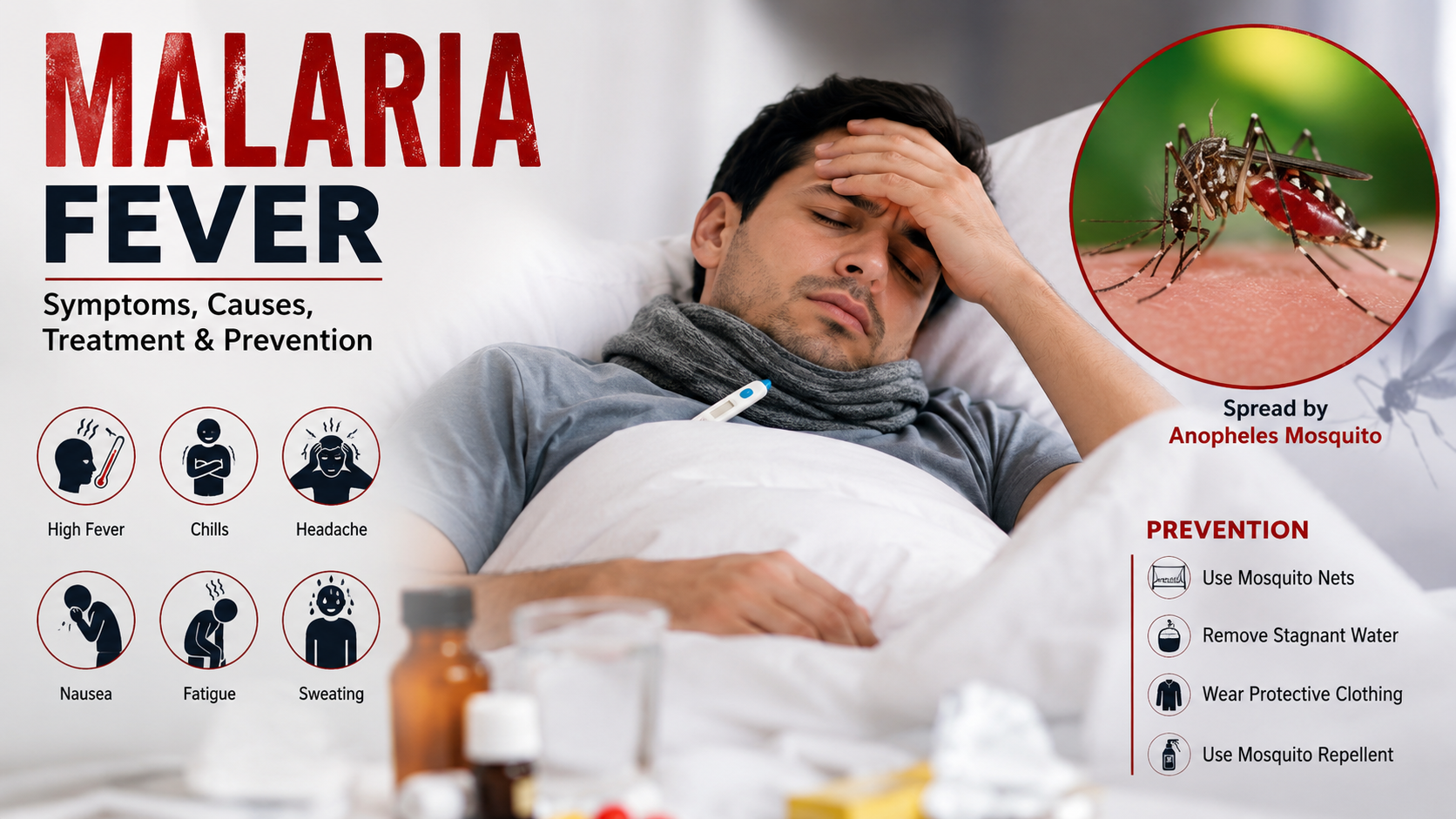
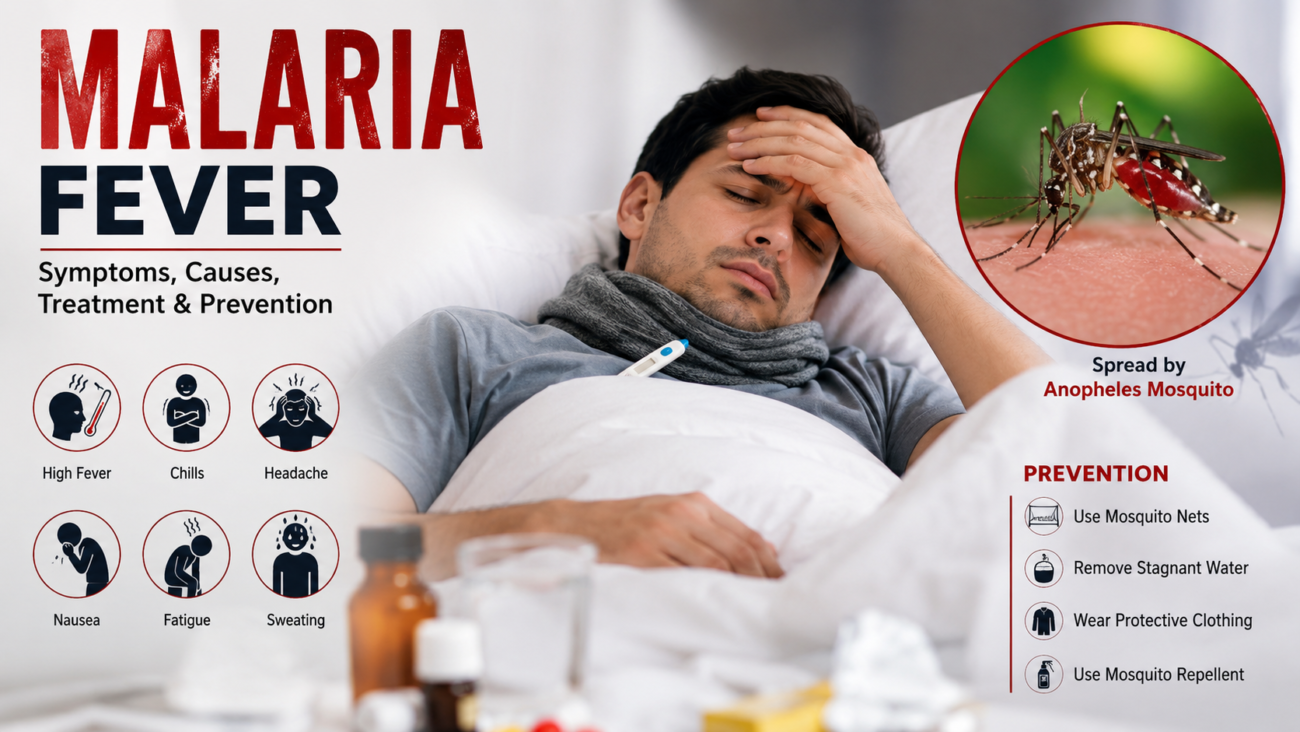
Malaria symptoms usually appear 10 to 15 days after being bitten by an infected mosquito.
Early symptoms include:
⦁ High fever
⦁ Chills and sweating
⦁ Headache
⦁ Fatigue and weakness
⦁ Body aches
Severe symptoms include:
⦁ Vomiting and nausea
⦁ Diarrhea
⦁ Confusion or dizziness
⦁ Severe anemia
⦁ Difficulty breathing
If not treated on time, malaria can become life-threatening.
Diagnosis of Malaria
Doctors diagnose malaria using:
⦁ Blood tests to detect parasites
⦁ Rapid diagnostic tests (RDTs)
⦁ Microscopic examination of blood samples
Early diagnosis is very important because it helps in starting treatment quickly and prevents complications.
Treatment of Malaria
Malaria is treatable with antimalarial medicines prescribed by doctors. The type of medicine depends on the severity and type of parasite.
Common treatments include:
⦁ Artemisinin-based combination therapies (ACTs)
⦁ Chloroquine (in some regions)
⦁ Supportive care for fever and dehydration
It is important to complete the full course of medication even if symptoms improve early, to prevent relapse.
Prevention of Malaria
Prevention is the most effective way to control malaria. Simple steps can significantly reduce the risk.
Key prevention methods:
⦁ Use mosquito nets while sleeping
⦁ Apply mosquito repellents on skin
⦁ Wear full-sleeve clothing at night
⦁ Avoid stagnant water around homes
⦁ Use insecticide sprays indoors
⦁ Install window screens to block mosquitoes
Community-level efforts like clean environments and mosquito control programs also play an important role.
Malaria in 2026: Current Situation
In 2026, malaria still affects millions of people worldwide, especially in developing countries. However, new medical advancements, better diagnostic tools, and improved awareness campaigns have reduced death rates compared to previous years.
Governments and health organizations are focusing on:
⦁ Mosquito control programs
⦁ Vaccination research
⦁ Public awareness campaigns
⦁ Improved access to healthcare in rural areas
Risk Factors of Malaria
Some people are at higher risk of getting malaria, including:
⦁ Children under 5 years old
⦁ Pregnant women
⦁ People with weak immune systems
⦁ Travelers visiting malaria-prone regions
⦁ People living in rural or tropical areas
Complications of Malaria
If not treated properly, malaria can lead to serious health problems such as:
Severe anemia
Organ failure (kidney or liver damage)
Brain infection (cerebral malaria)
Death in severe cases
Importance of Awareness and Education
Awareness is one of the strongest tools in fighting malaria. Many cases can be prevented if people understand how the disease spreads and how to protect themselves.
⦁ Educational campaigns help people learn:
⦁ How to avoid mosquito bites
⦁ Importance of cleanliness
⦁ Early symptoms of malaria
⦁ Need for quick medical treatment
Key Takeaways: Protect Yourself from Malaria
Malaria is a serious disease, but it can be controlled and prevented with simple daily habits. Prevention is always better than cure, especially for mosquito-borne diseases.
⦁ Use mosquito nets while sleeping
⦁ Keep your surroundings clean and dry
⦁ Avoid stagnant water near homes
⦁ Wear protective clothing at night
⦁ Use mosquito repellents regularly
⦁ Seek medical help immediately if symptoms appear
By following these simple steps, you can protect yourself and your family from malaria. Awareness, cleanliness, and early treatment are the strongest defenses against this disease.