
Blog
Polio

Introduction:
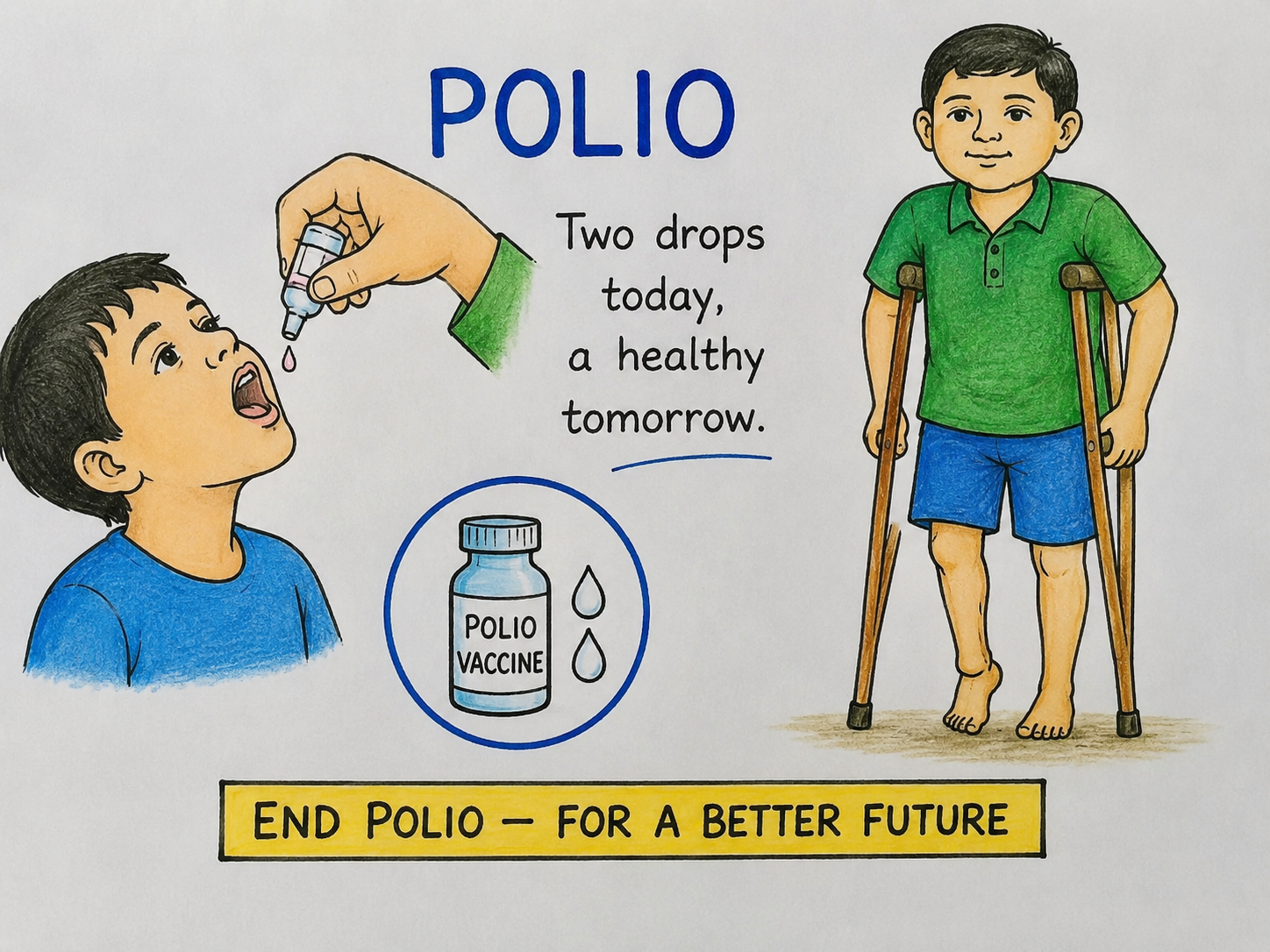
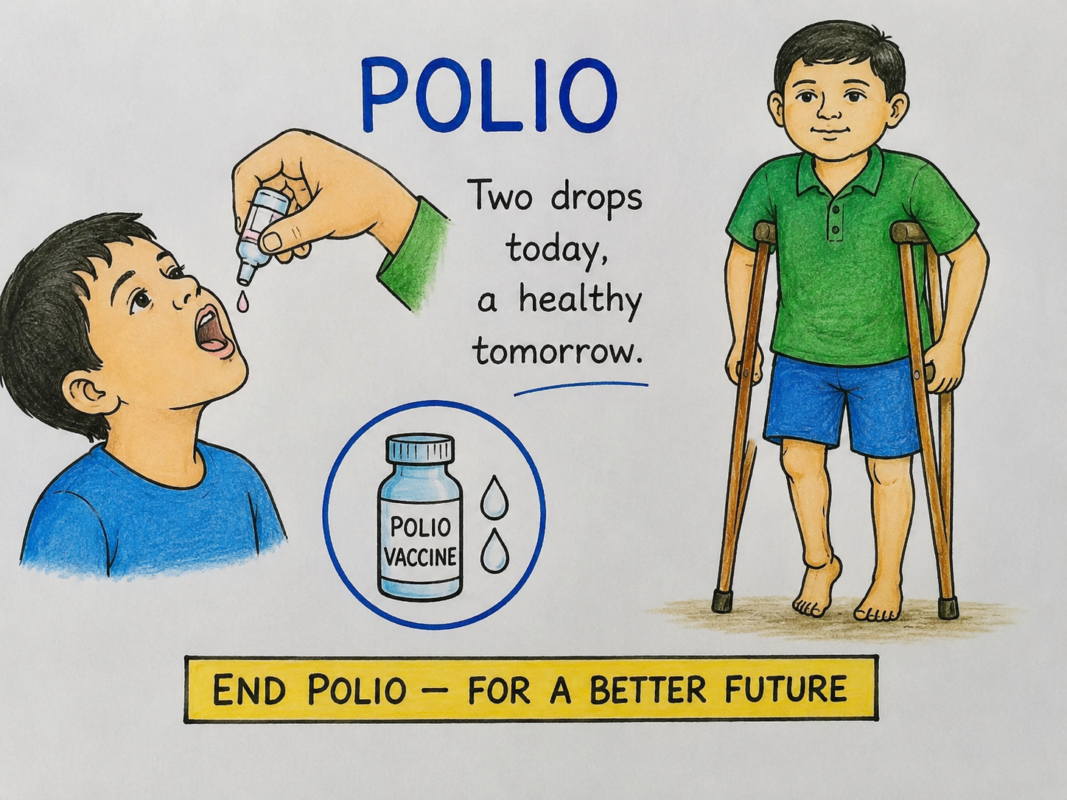
Polio, also known as Poliomyelitis, is a serious infectious disease caused by the poliovirus. This virus mainly affects young children, especially those under the age of five. Polio attacks the nervous system and can cause permanent paralysis. In severe cases, it can even lead to death. Although polio has been eliminated from many countries, it is still a health concern in some parts of the world.
Cause of Polio
Polio is caused by the poliovirus, which enters the human body through:
Contaminated food
Dirty water
Poor hygiene
The virus spreads easily in areas where sanitation is poor and vaccination coverage is low.
How Polio Spreads
Polio spreads from person to person through:
Fecal-oral route (contact with stool of an infected person)
Drinking contaminated water
Eating unhygienic food
Close contact with an infected person
Children are more vulnerable because their immune system is not fully developed.
Symptoms of Polio
Polio symptoms vary from mild to severe. Many infected people show no symptoms, but some common symptoms include:
Fever
Sore throat
Fatigue
Muscle pain
Weakness in arms or legs
In severe cases:
Difficulty in breathing
Paralysis of legs or arms
permanent disability
Effects of Polio on the Body
Polio mainly affects the nervous system. The virus damages nerve cells that control muscles. As a result:
Muscles become weak
Limbs may stop working
Body parts may become permanently paralyzed
In extreme cases, breathing muscles are affected, which can be life-threatening
Diagnosis of Polio:
Doctors diagnose polio by:
Medical history
Physical examination
Stool tests
Throat swab tests
Laboratory tests to detect poliovirus
Early diagnosis is crucail in preventing complications.
Treatment of Polio
There is no cure for polio. Treatment focuses on managing symptoms, such as:
Pain relief medicines
Physical therapy
Use of braces or walking aids
Proper rest and nutrition
Supportive care helps improve quality of life.
Prevention of Polio
Polio can be prevented through vaccination. Polio vaccines include:
Oral Polio Vaccine (OPV)
Inactivated Polio Vaccine (IPV)
Regular immunization campaigns help protect children and stop the spread of the virus.
Importance of Polio Vaccination
Polio vaccination is very important because:
It protects children from paralysis
It helps eliminate polio globally
It is safe and effective
It saves lives
Parents should ensure their children receive all recommended doses.
Conclusion
Polio is a dangerous but preventable disease. Vaccination, good hygiene, and public awareness are key to eradicating polio. With collective effort and regular immunization, the world can become completely polio-fr