

Blog
Skin cancer

Introduction
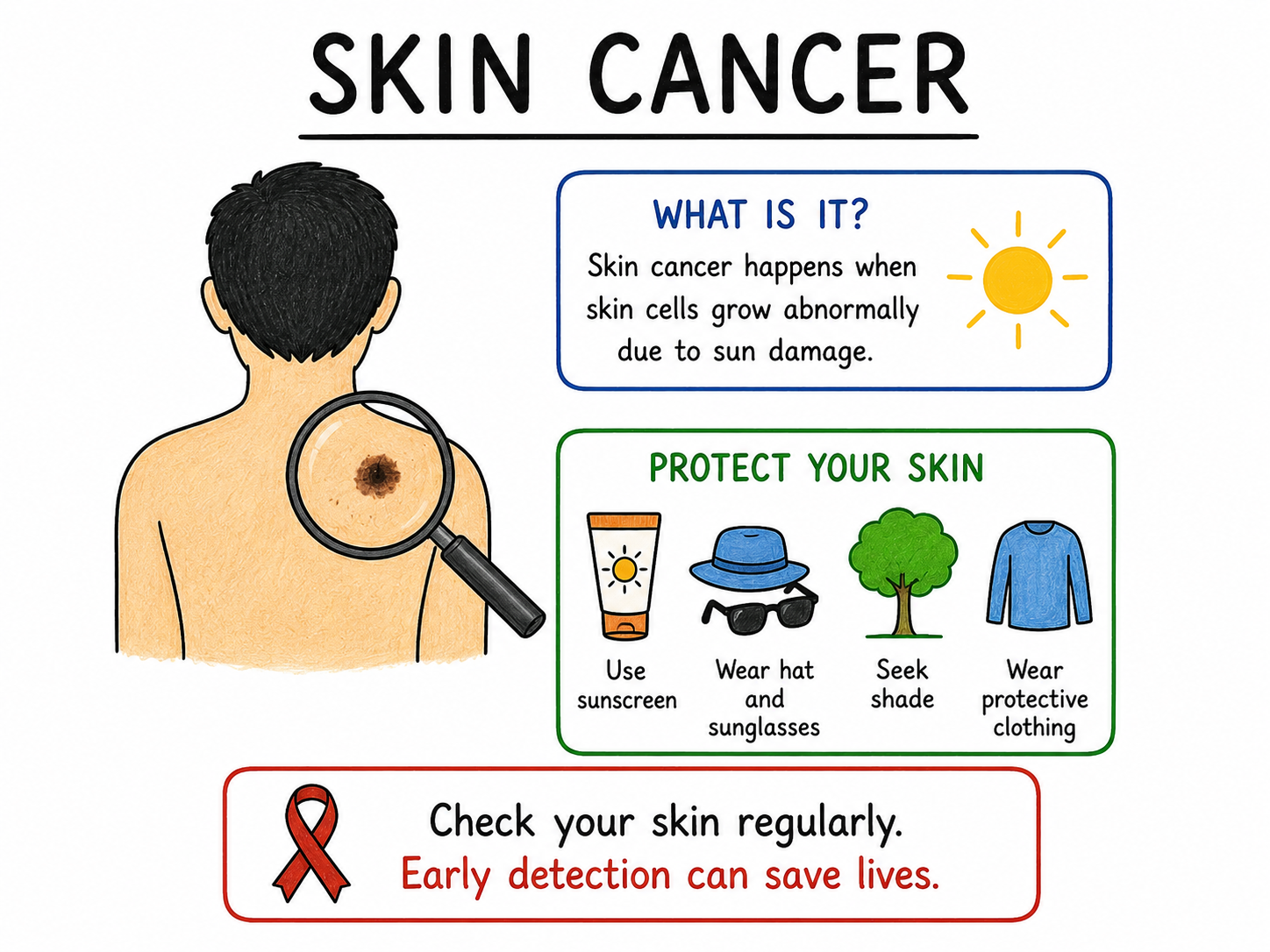
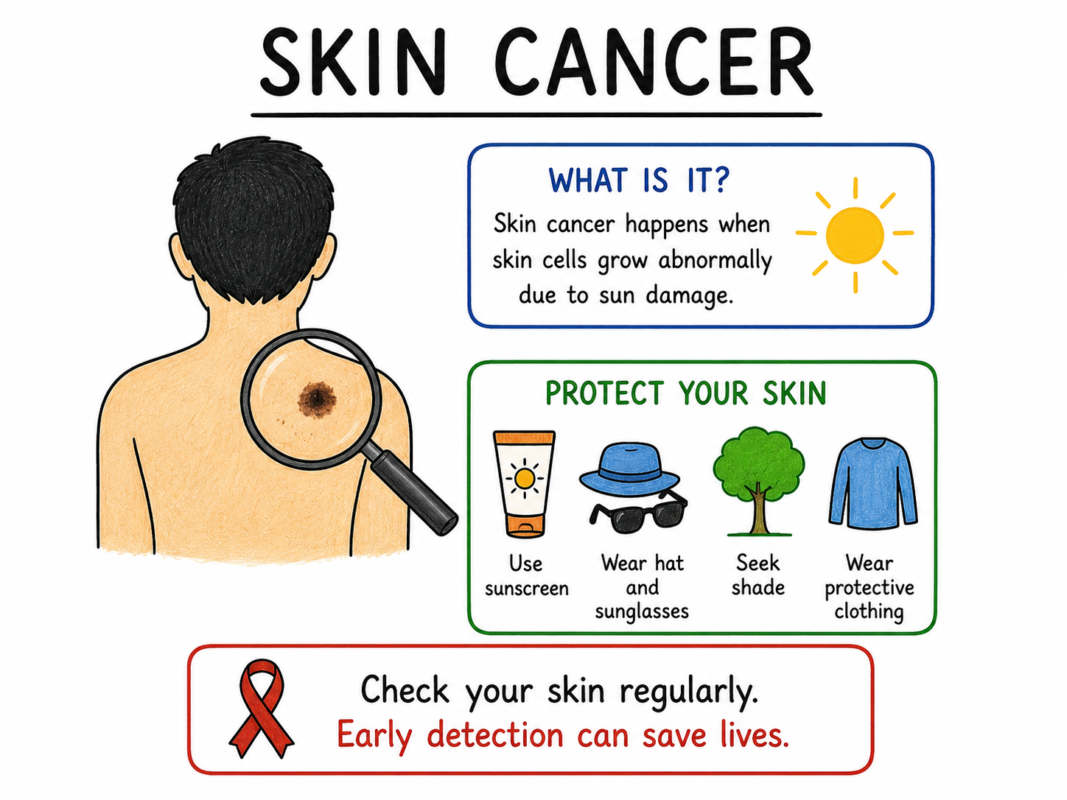
Skin Cancer is one of the most common types of cancer in the world. It happens when skin cells grow in an abnormal and uncontrolled way. Skin cancer mostly develops because of too much exposure to the sun’s harmful ultraviolet (UV) rays. It can appear on any part of the body, especially areas that are exposed to sunlight such as the face, neck, arms, and hands.
Skin cancer can affect people of all ages. Early detection and proper treatment can help save lives. Protecting the skin from sunlight and checking the skin regularly are important steps to prevent this disease.
Types of skin cancer
- Basal Cell Carcinoma
Basal cell carcinoma is the most common type of skin cancer. It usually grows slowly and rarely spreads to other parts of the body. It often appears as a small shiny bump or sore on the skin. - Squamous Cell Carcinoma
Squamous cell carcinoma develops in the outer layers of the skin. It may appear as a red patch, rough sore, or lump. If not treated early, it can spread to nearby tissues. - Melanoma
Melanoma is the most dangerous type of skin cancer. It develops in the cells that produce skin color. Melanoma can spread quickly to other organs if not treated early.
Causes of Skin Cancer - Too Much Sun Exposure
One of the biggest causes of skin cancer is spending too much time in the sun. The sun produces ultraviolet (UV) rays that can damage skin cells. When the skin is exposed to strong sunlight for many years, the cells may start growing abnormally and turn into cancer.
People who work outside, such as farmers, construction workers, and athletes, are at a higher risk because they spend more time under the sun. Severe sunburns during childhood can also increase the chances of developing skin cancer later in life. - Family History and Genetics
Skin cancer can sometimes run in families. If parents, brothers, or sisters have had skin cancer, the risk becomes higher. Some people are born with skin types that are more sensitive to sunlight, such as fair skin, light-colored eyes, and red or blonde hair.
Genetic changes in the body can also increase the chance of developing dangerous skin cancers like Melanoma. - Weak Immune System
A weak immune system makes it harder for the body to fight damaged or abnormal cells. People with diseases that weaken the immune system or those taking strong medicines after organ transplants may have a higher risk of skin cancer.
When the immune system is weak, harmful skin cells can grow more easily and develop into cancer.
Treatment of skin cancer
Skin Cancer is treated in different ways depending on the type and stage of the cancer. One of the most common treatments is surgery. In surgery, doctors remove the cancerous skin cells along with a small amount of healthy skin around them. This helps stop the cancer from spreading. Mohs surgery is another special method in which doctors remove the skin layer by layer until all cancer cells are gone. Surgery is very effective for early-stage skin cancer.
Radiation therapy is also used to treat skin cancer. In this treatment, high-energy rays are directed at the affected skin area to destroy cancer cells. Radiation therapy is helpful for patients who cannot undergo surgery or when cancer has spread to nearby tissues. Some patients may experience redness, dryness, or tiredness after treatment.
conclusion,
Skin Cancer is a serious disease that can affect people of all ages. It usually develops because of too much exposure to harmful UV rays from the sun. Early signs such as unusual moles, skin changes, or sores that do not heal should never be ignored. Early diagnosis and proper treatment can help prevent the cancer from spreading and increase the chances of recovery. People can reduce the risk of skin cancer by protecting their skin from sunlight, using sunscreen, wearing protective clothing, and getting regular skin checkups. Awareness, prevention, and early medical care are very important for maintaining healthy skin and preventing skin cancer.