

Blog
Understanding Allergies: How They Develop, common Triggers, and Best ways to manage Them Naturally and medically

What Are Allergies?
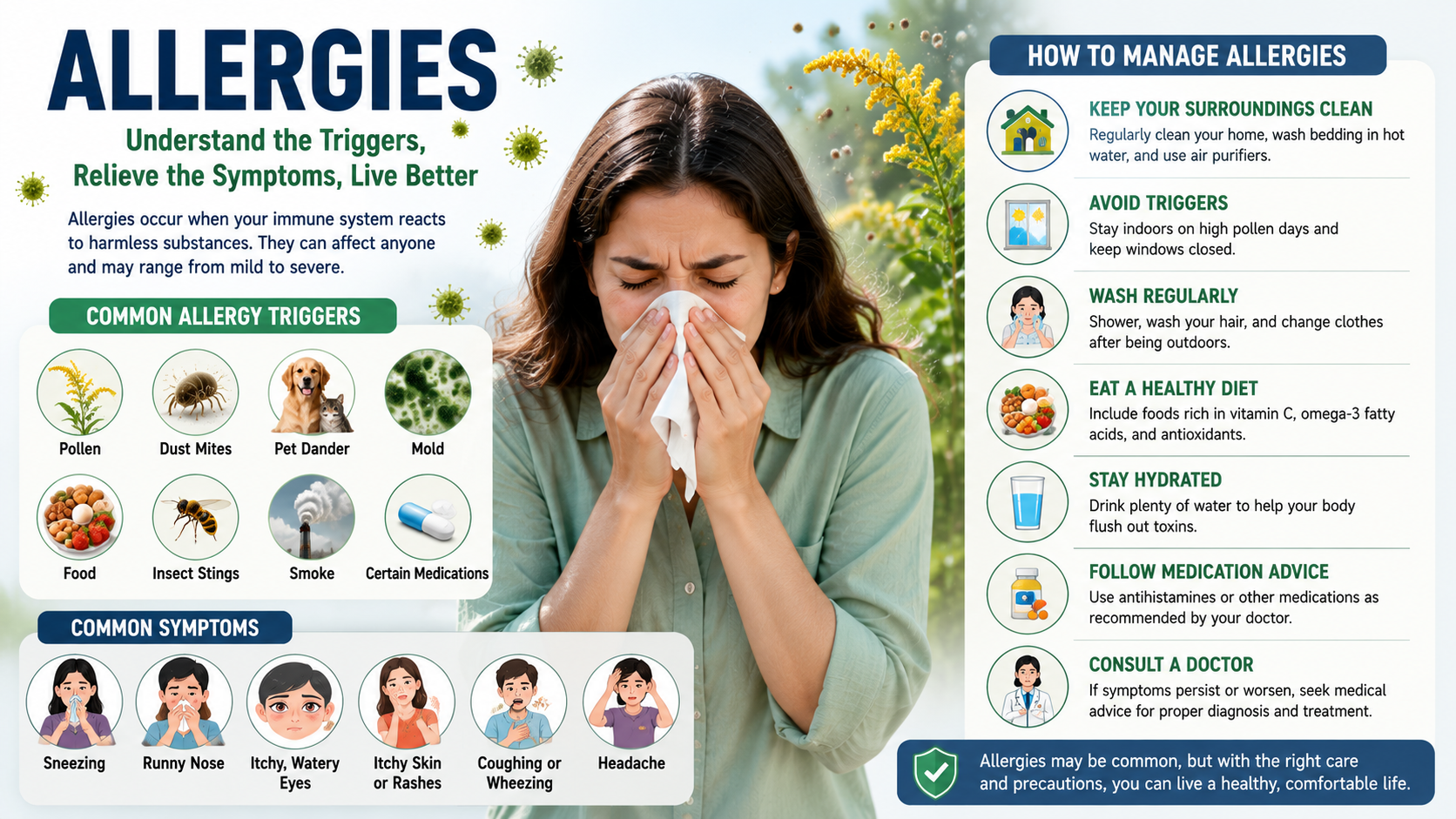
Allergies are a condition in which the body’s immune system reacts abnormally and too strongly to substances that are normally harmless. These substances are called allergens. Common allergens include dust, pollen, food items, animal fur, and certain medicines. In allergic people, the immune system treats these harmless substances as dangerous and releases chemicals like histamine. This reaction causes symptoms such as sneezing, itching, skin rashes, watery eyes, or breathing problems. Allergies can be mild in some people but severe in others.
How Allergies Develop in the Human Body
Allergies develop when the immune system becomes overly sensitive to a specific substance. This process usually happens in two stages. In the first stage, called sensitization, the body is exposed to the allergen for the first time and starts producing antibodies against it, even if no symptoms appear. In the second stage, when the body encounters the same allergen again, the immune system reacts strongly and releases histamine and other chemicals. These chemicals cause inflammation, swelling, itching, and other allergy symptoms. Over time, repeated exposure can make the allergic reaction more severe in some individuals.
Common Triggers of Allergies (Environmental and Lifestyle Factors)
Allergies can be triggered by many factors in daily life. Environmental triggers include dust, smoke, air pollution, and mold, which are very common in urban areas. Seasonal triggers include pollen from trees, grass, and flowers, especially during spring or changing weather. Food triggers include milk, eggs, peanuts, seafood, and certain processed foods. Some people are also sensitive to insect bites, pet dander, and chemical substances found in perfumes, cosmetics, or cleaning products. Even changes in weather and humidity can worsen allergic reactions in sensitive individuals.
Types of Allergies People Commonly Search For Online
There are several types of allergies based on how and where they affect the body. Skin allergies are very common and cause redness, itching, swelling, and rashes on different parts of the body. Respiratory allergies affect the nose, throat, and lungs, leading to sneezing, coughing, runny nose, and breathing difficulty. Food allergies occur when the immune system reacts to certain foods, sometimes causing stomach pain, vomiting, or skin reactions. Seasonal allergies, also known as hay fever, occur at specific times of the year due to pollen exposure. Drug allergies occur when the body reacts negatively to certain medicines.
Common Symptoms of Allergies
Symptoms of allergies vary depending on the type and severity. The most common symptoms include frequent sneezing, runny or blocked nose, and watery or itchy eyes. Skin-related symptoms include redness, rashes, hives, and constant itching. Some people may experience coughing, wheezing, chest tightness, or shortness of breath in respiratory allergies. In severe cases, swelling of the lips, face, or throat may occur, which can become a medical emergency. Symptoms may appear immediately after exposure or sometimes after a few hours.
How Allergies Are Diagnosed
Doctors diagnose allergies using different medical methods. A skin prick test is commonly used, where small amounts of allergens are placed on the skin to check reactions. Blood tests are also used to measure specific antibodies (IgE levels) that indicate allergic sensitivity. Doctors also carefully study the patient’s medical history and symptom patterns to identify possible triggers. In food allergies, an elimination diet may be recommended, where certain foods are removed and then slowly reintroduced to find the cause of the reaction. Proper diagnosis is important for effective treatment.
Best Natural Ways to Manage Allergies at Home
Natural management methods can help reduce mild allergy symptoms. Keeping the home clean and dust-free is very important to reduce exposure to allergens. Steam inhalation can help open blocked nasal passages and improve breathing. Drinking warm water and staying hydrated can soothe irritation in the throat and nose. Washing hands and face after coming from outside helps remove allergens from the skin. Using clean bedding and avoiding pets in sleeping areas can also reduce symptoms. However, natural methods are mainly supportive and should be combined with medical treatment if symptoms are strong.
Medical Treatment for Allergies
Medical treatment depends on the severity and type of allergy. Antihistamine medicines are commonly prescribed to reduce sneezing, itching, and runny nose. Nasal sprays help reduce inflammation in the nasal passages and improve breathing. For skin allergies, doctors may prescribe creams or ointments to reduce redness and itching. In long-term or severe cases, immunotherapy (allergy shots) may be used to gradually reduce sensitivity to allergens. These treatments help control symptoms and improve quality of life, but should always be used under medical supervision.
How to Prevent Allergies in Daily Life
Prevention is the most effective way to control allergies. Keeping the environment clean and free from dust reduces exposure to allergens. Wearing a mask in polluted or dusty areas can protect the respiratory system. Avoiding known triggers such as certain foods or chemicals helps prevent reactions. Regular cleaning of bedsheets, carpets, and curtains is also important. A healthy lifestyle, including a balanced diet, proper sleep, and exercise, can help strengthen the immune system and reduce allergy risk over time.
When to Seek Medical Help for Allergies
Medical help should be sought immediately if allergy symptoms become severe or life-threatening. Difficulty in breathing, tightness in the chest, or swelling of the face, lips, or throat are serious warning signs. If symptoms continue for a long time or keep returning frequently, it is important to consult a doctor. Sudden severe allergic reactions, known as anaphylaxis, require emergency treatment. Early medical attention can prevent complications and ensure proper management.
Final Thoughts
Allergies are a common immune system condition in which the body reacts strongly to harmless substances. They can affect different parts of the body, including the skin, nose, lungs, and digestive system. Understanding the causes, symptoms, and triggers of allergies is very important for effective control. With proper medical treatment, natural care, and preventive habits, allergies can be managed successfully and their impact on daily life can be greatly reduced.