

Blog
Lung Cancer

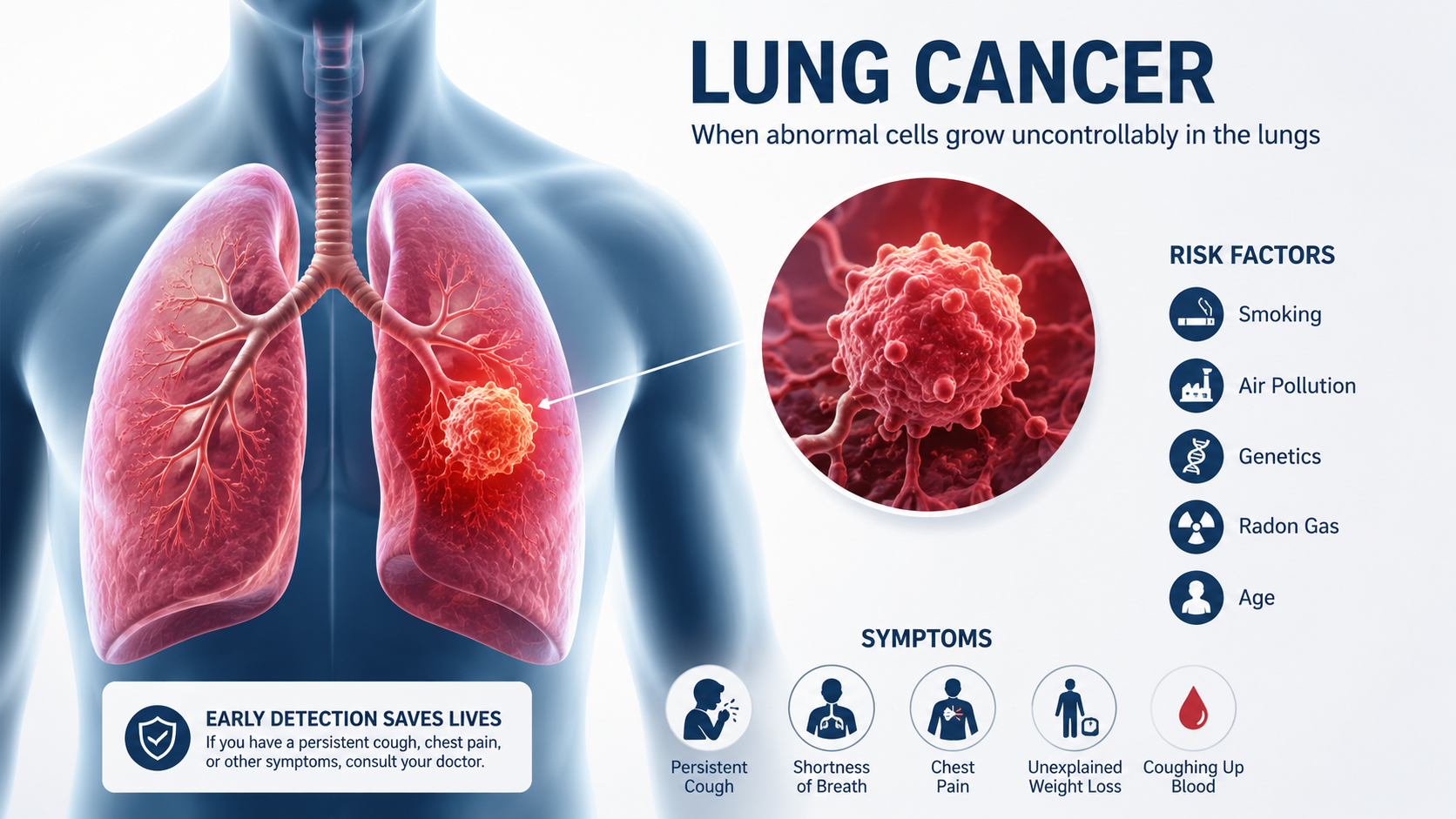
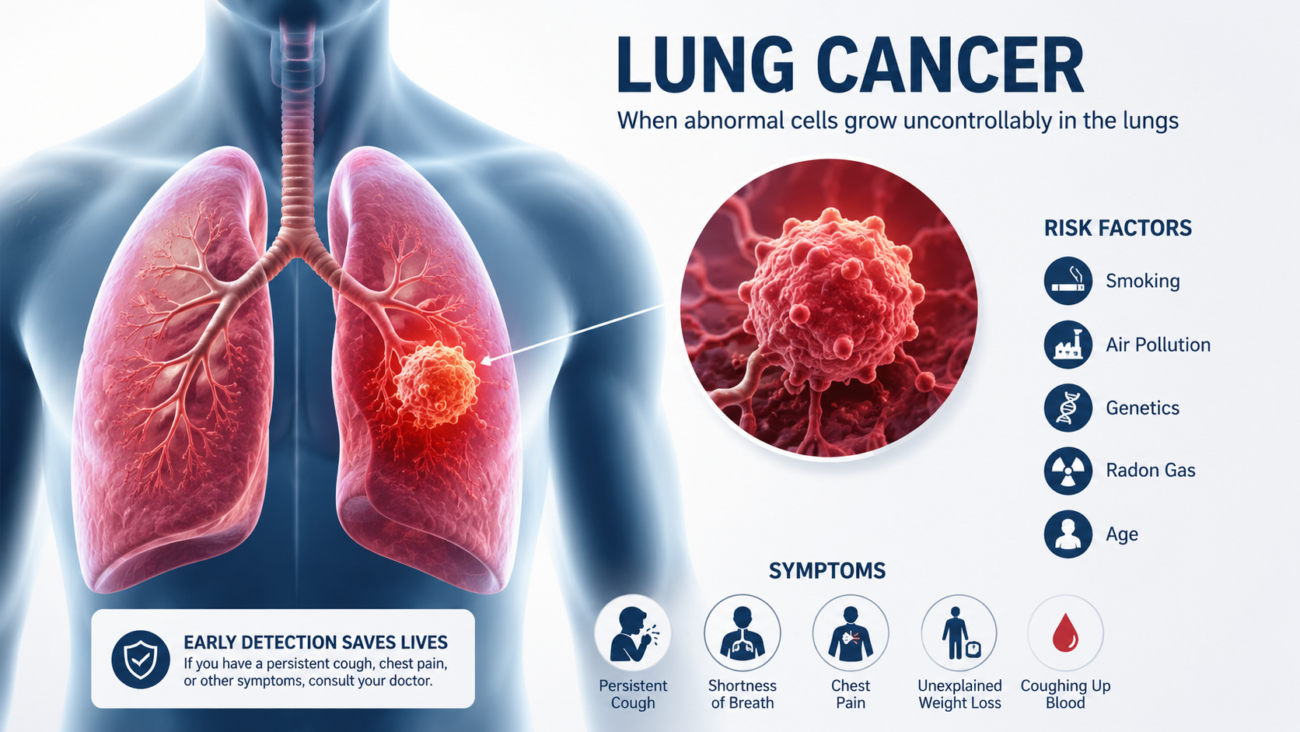
Lung cancer is a kind of cancer that starts as a growth of cells in the lungs. The lungs are two spongy organs in the chest that control breathing. Lung cancer is the leading cause of cancer deaths worldwide.
What is lung cancer?
Lung cancer is a disease where abnormal cells in the lungs grow uncontrollably, often forming a tumor. It is a leading cause of cancer deaths and is typically caused by uncontrolled cell division due to DNA mutations. The two main types are non-small cell lung cancer and small cell lung cancer, which are treated differently.
Who develops lung cancer
Smokers and former smokers: The most significant risk is associated with a history of smoking.
Older adults: The risk is highest for people aged 65 and older.
People with other risk factors: Anyone exposed to the substances mentioned above, or with a family history of the disease, is at a higher risk.
People who have never smoked: While less common, lung cancer can still develop in people who have never smoked, due to other factors like secondhand smoke, radon, or genetic
symptoms of Lung cancer
Four common symptoms of lung cancer are a persistent cough, chest pain, shortness of breath, and coughing up blood or blood in phlegm. It’s important to note that many early-stage lung cancers have no symptoms, so it is crucial to see a doctor if you experience any of these or other changes in your health, especially if they persist.
1. A persistent or worsening cough
This can be a new cough or a change in a cough you’ve had for a long time.
The cough may become more frequent or more severe over time.
It can be accompanied by chest or shoulder pain.
2. Chest pain
This pain may be constant or intermittent.
It can feel worse when you cough, breathe deeply, or laugh.
3. Shortness of breath
You may feel breathless or have trouble breathing for no clear reason.
This can occur during activities or even when you are at rest.
. 4. Coughing up blood or blood in phlegm
This is known as hemoptysis.
Even a small amount of blood should be reported to a doctor.
Other potential symptoms
Unexplained weight loss and/or loss of appetite, Hoarseness, Persistent chest infections that don’t go away, and Unexplained fatigue or weakness.
Types of lung cancer
The four main types of lung cancer are adenocarcinoma, squamous cell carcinoma, large cell carcinoma, and small cell lung carcinoma. The first three are grouped as non-small-cell lung cancer (NSCLC), which is more common, while small cell lung carcinoma (SCLC) is less common and tends to be more aggressive.
Adenocarcinoma: This is the most common type of NSCLC and often starts in the mucus-making cells that line the surfaces of the lungs. It is the most common type in non-smokers, though it also occurs in smokers.
Squamous cell carcinoma: This type begins in the flat cells that line the inside of the airways in the lungs. It is often linked to a history of smoking and tends to be found near the center of the lungs.
Large cell carcinoma: This is a less common type of NSCLC that can appear in any part of the lung.
Small cell lung carcinoma (SCLC): This is a more aggressive type of lung cancer that grows and spreads quickly. It is also known as oat cell carcinoma.
causes of Lung cancer
A cough that does not go away or gets worse.
Coughing up blood or rust-colored sputum (spit or phlegm)
Chest pain that is often worse with deep breathing, coughing, or laughing.
Hoarseness.
Loss of appetite.
Unexplained weight loss.
Shortness of breath.
Feeling tired or weak.
treatment of lung cancer
Lung Cancer Treatment Options
Surgery.
Radiation Therapy.
Chemotherapy.
Targeted Therapy.
Immunotherapy.
Tumor treating fields.
Clinical trials.
Supportive/Palliative Care.
conclusion
Lung cancer remains a leading cause of cancer death globally, though survival rates are slowly improving, driven by advances in early detection and targeted therapies. Despite treatment, a significant portion of patients are diagnosed at later stages, which reduces the chances of a cure. Ongoing research focuses on understanding the molecular subtypes, improving screening methods like low-dose CT scans, and developing new treatments to improve survival and quality of life for patients.