

Blog
Eye infection : How to protect your Eyes Naturally

What is Eye Infection?
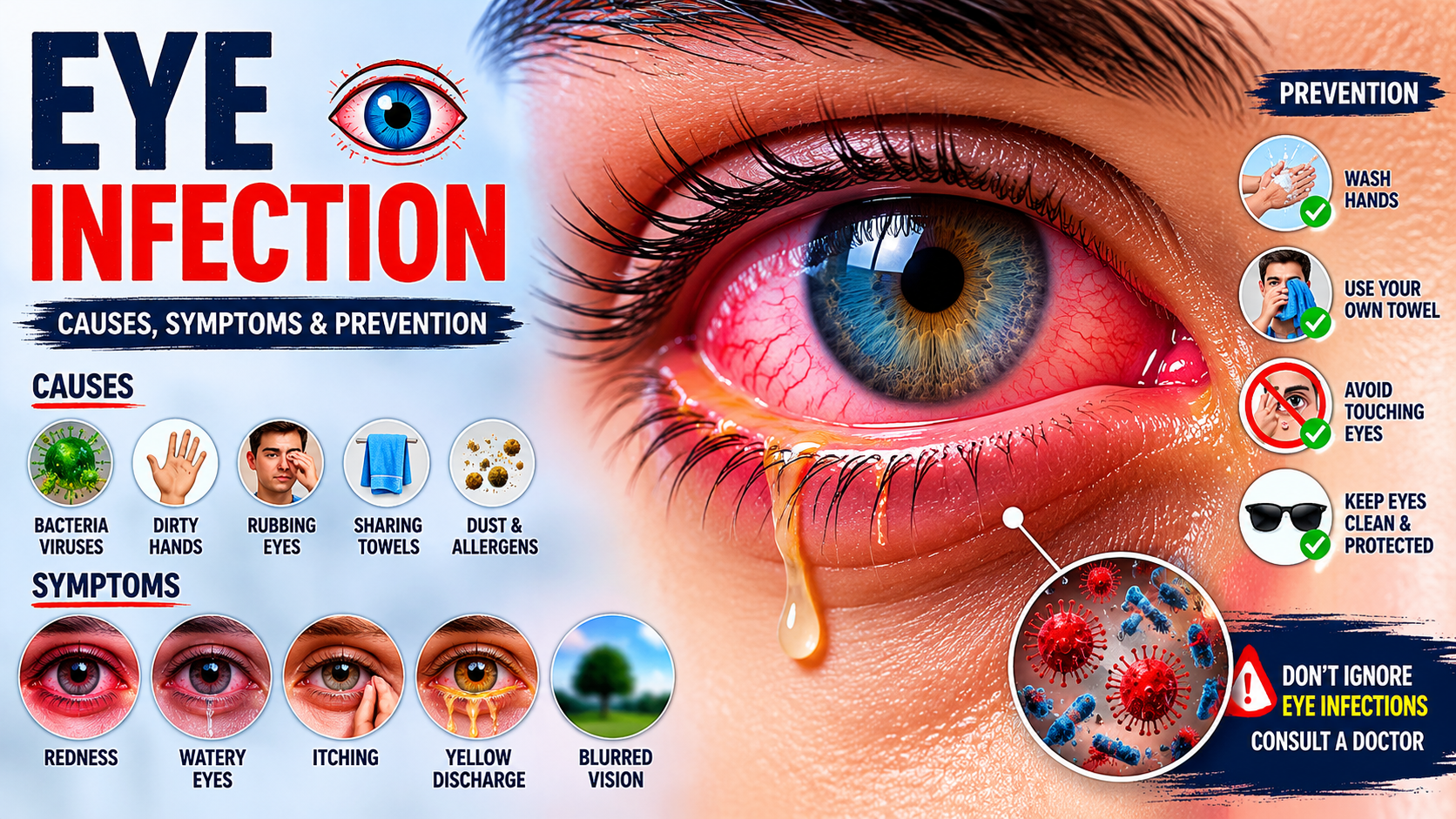
An eye infection is a condition in which harmful germs like bacteria, viruses, or fungi enter the eye and cause irritation or damage. When this happens, the eye may become red, painful, swollen, or watery. Sometimes there may also be itching, burning, or a sticky discharge from the eye. Eye infections can affect one eye or both eyes and can happen to people of any age. They are usually caused by touching the eyes with dirty hands, using contaminated makeup or contact lenses, or coming in close contact with an infected person. Most eye infections are not very serious if treated early, but if ignored, they can get worse and affect vision. Proper hygiene and timely treatment can help prevent and cure eye infections easily.
3 Main Types of Eye Infections
Eye infections are mainly divided into three common types based on the cause of infection. Here are the main types with simple explanations:
- Bacterial Eye Infection
Bacterial eye infection is caused by harmful bacteria entering the eye. It often leads to thick yellow or green discharge, redness, swelling, and pain in the eye. The eyes may feel sticky, especially after sleep. This type of infection can spread easily through dirty hands, contaminated makeup, or contact lenses. It usually needs antibiotic eye drops or ointments prescribed by a doctor. - Viral Eye Infection
Viral eye infection is caused by viruses and is very common. It often occurs along with cold, flu, or sore throat. Symptoms include watery eyes, redness, irritation, and mild swelling. Unlike bacterial infection, the discharge is usually clear and watery. Viral eye infections spread quickly from person to person, especially through coughing, sneezing, or touching infected surfaces. - Allergic Eye Infection
Allergic eye infection is not caused by germs but by allergens like dust, pollen, smoke, or pet hair. It causes itching, redness, watery eyes, and burning sensation. Both eyes are usually affected. This type is not contagious and can be controlled by avoiding allergens and using antihistamine eye drops.
Bacterial Eye infection VS viral Eye infection
Bacterial eye infection and viral eye infection both affect the eyes, but they are caused by different reasons and show different symptoms. A bacterial eye infection is caused by bacteria that enter the eye and create an infection. In this type, the eye becomes very red, and thick yellow or green discharge is produced. The eyes may also stick together, especially after sleeping. It can easily spread through dirty hands, contaminated makeup, or sharing contact lenses. This infection is usually treated with antibiotic eye drops or ointments, and improvement can be seen within a few days.
A viral eye infection is caused by a virus and often occurs along with cold or flu. In this type, the eye becomes red, but the discharge is usually watery instead of thick. The eye may feel irritated, watery, and sensitive to light. Viral eye infections spread very quickly from one person to another, especially through coughing, sneezing, or close contact. There is no specific antibiotic treatment for it, as it usually gets better on its own within 1 to 2 weeks. However, a doctor may recommend eye drops or supportive care to reduce discomfort.
How Eye infection Spreads
Eye infections spread mainly through contact with germs such as bacteria and viruses. One of the most common ways is touching the eyes with dirty hands. When a person touches contaminated surfaces like doorknobs, mobile phones, towels, or makeup and then touches their eyes, germs can easily enter and cause infection.
Eye infections can also spread from person to person. If an infected person rubs their eyes and then shakes hands, or shares personal items like pillows, towels, eye makeup, or contact lenses, the infection can pass to others. This is especially common in viral eye infections, which spread very quickly.
In some cases, eye infections spread through coughing and sneezing. Tiny droplets containing viruses can enter the eyes of another person, especially in close contact situations.
Home remedies for Eye infection
Home remedies for eye infection can help reduce discomfort and support healing, but they are usually effective only for mild cases. One of the simplest remedies is keeping the eyes clean. You can gently wash your eyes with clean, lukewarm water to remove dirt and discharge. Always make sure your hands are clean before touching your eyes.
A cold compress is also very helpful. Placing a clean, cold cloth over the closed eyes for a few minutes can reduce swelling, redness, and irritation. For some types of irritation, a warm compress can also help by soothing the eyes and loosening crust or discharge.
Another useful remedy is using rose water. Pure rose water can be gently applied to the eyes using clean cotton to give a cooling and calming effect. However, it should be used carefully and only if it is safe and clean.
It is also important to rest your eyes and avoid screen time as much as possible. Proper rest helps the eyes recover faster. Drinking plenty of water and staying hydrated also supports overall healing.
Although these home remedies can provide relief, they are not a replacement for medical treatment. If symptoms get worse, such as severe pain, thick discharge, or vision problems, it is important to consult a
Best Eye drops for eye infection
There is no single “best” eye drop for all eye infections because the right treatment depends on the cause of the infection. Different types of eye infections need different eye drops, so it is important to use the correct one recommended by a doctor.
For bacterial eye infections, antibiotic eye drops are usually used. These eye drops help kill bacteria and reduce symptoms like redness, swelling, and thick discharge. They should only be used when prescribed by a healthcare professional.
For viral eye infections, antibiotic drops do not work. In most cases, the infection gets better on its own. Doctors may suggest lubricating eye drops or artificial tears to reduce irritation, dryness, and discomfort while the eye heals naturally.
For allergic eye irritation, antihistamine eye drops are commonly used. These help reduce itching, redness, and watery eyes caused by dust, pollen, or other allergens.
Lubricating or artificial tear eye drops can also be used in many mild cases. They help keep the eyes moist and wash out irritants, providing relief from burning and dryness.
How to prevent eye infection
Eye infections can often be prevented by following simple hygiene and healthy habits. The most important step is to keep your hands clean. Always wash your hands properly with soap and water before touching your eyes, as dirty hands can carry germs that cause infection.
Avoid rubbing your eyes, especially with unclean hands. Rubbing can transfer bacteria and viruses directly into the eyes and increase the risk of infection. If your eyes feel itchy or irritated, try using clean water or eye drops instead of touching them.
It is also important not to share personal items like towels, pillowcases, eye makeup, or contact lenses with others. These items can easily carry germs from one person to another.
If you use contact lenses, always clean and store them properly. Never use dirty or expired lens solution, and avoid wearing lenses for too long. Proper lens hygiene greatly reduces the risk of eye infections.
Protect your eyes from dust, smoke, and pollution by wearing sunglasses when going outside. This helps prevent irritation and exposure to harmful particles.
Maintaining a healthy lifestyle also helps. Eating a balanced diet, drinking enough water, and getting proper sleep keeps your immune system strong, which helps fight infections naturally.
By following these simple steps, you can greatly reduce the risk of getting an eye infection and keep your eyes healthy.