

Blog
What is Dehydration? Causes, Symptoms, and prevention

Introduction
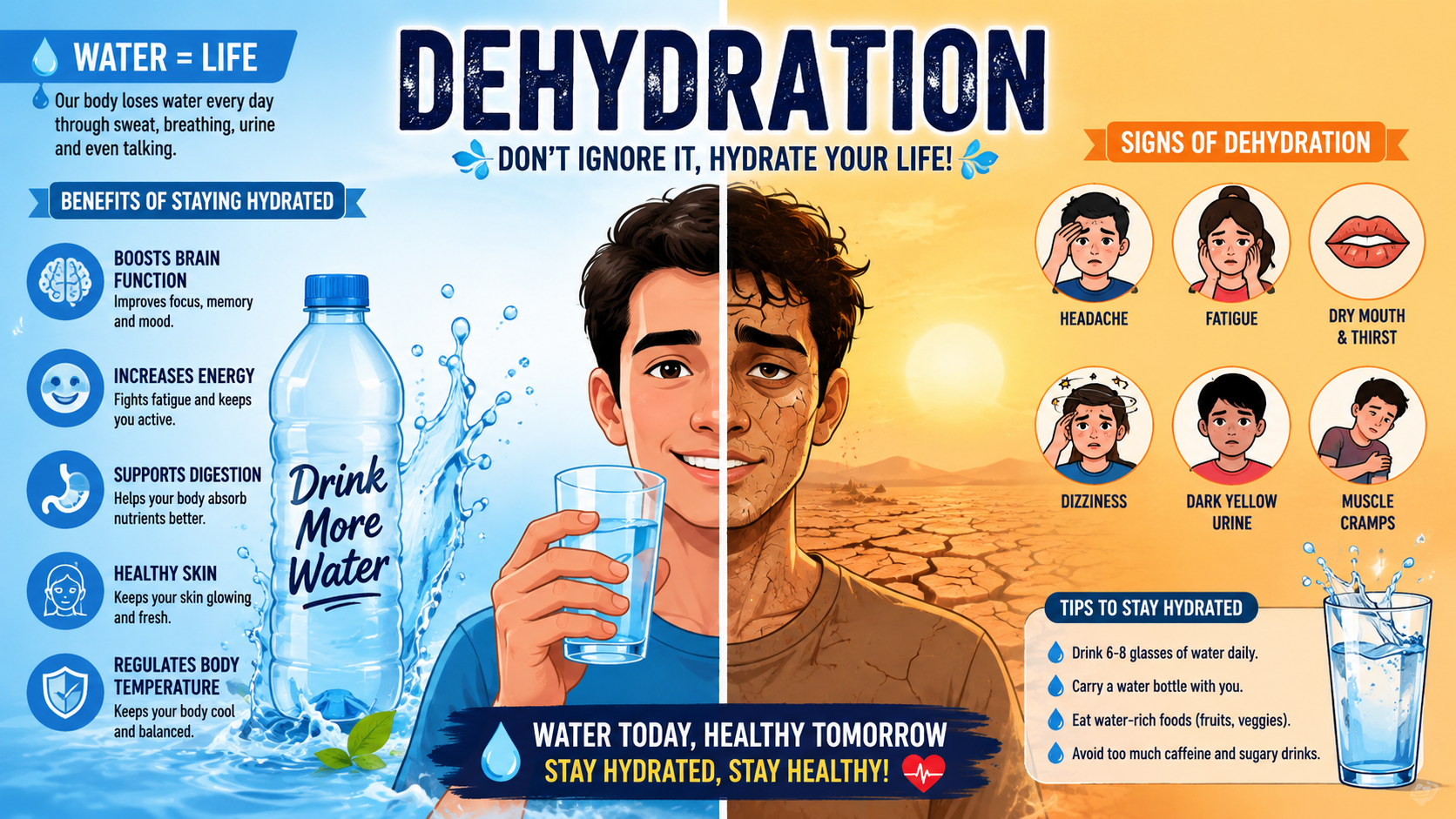
Dehydration is a condition that occurs when the body loses more fluids than it takes in. Water is essential for almost every bodily function, including regulating body temperature, transporting nutrients, supporting digestion, and removing waste products. When the body does not have enough water, these functions become less efficient, leading to dehydration.
In 2026, dehydration remains a major health concern due to rising temperatures, busy lifestyles, and poor hydration habits. People of all ages can experience dehydration, but children, older adults, and athletes are particularly vulnerable.
Signs and Symptoms of Dehydration
Recognizing dehydration early can help prevent serious health complications. Common symptoms include:
⦁ Excessive thirst
⦁ Dry mouth and lips
⦁ Dark yellow urine
⦁ Reduced urination
⦁ Headaches
⦁ Dizziness
⦁ Fatigue and weakness
⦁ Muscle cramps
⦁ Dry skin
Severe dehydration may cause confusion, rapid heartbeat, low blood pressure, sunken eyes, and even loss of consciousness. Immediate medical attention is required in such cases.
Common Causes of Dehydration
There are many reasons why dehydration occurs. Some of the most common causes include:
⦁ Not drinking enough water throughout the day
⦁ Excessive sweating during hot weather
⦁ Intense physical exercise
⦁ -Fever and infections
⦁ Vomiting and diarrhea
⦁ Excessive caffeine consumption
⦁ Certain medications
During summer months, people lose more fluids through sweat, making dehydration much more common.
Daily Water Intake for Proper Hydration
One of the most frequently searched questions in 2026 is: “How much water should I drink daily?”
Although individual needs vary, most health experts recommend drinking between 2 and 3 liters of water per day. Athletes, outdoor workers, and people living in hot climates may require more fluids.
Factors affecting water needs include:
⦁ Age
⦁ Weight
⦁ Activity level
⦁ Climate
⦁ Health conditions
Listening to your body and drinking water regularly is one of the simplest ways to stay hydrated.
Best Foods and Drinks for Hydration
Hydration does not come only from drinking water. Many foods contain a high percentage of water and can contribute to daily fluid intake.
Some of the best hydrating foods include:
⦁ Watermelon
⦁ Cucumber
⦁ Oranges
⦁ Strawberries
⦁ Lettuce
⦁ Tomatoes
Hydrating drinks include:
⦁ Water
⦁ Coconut water
⦁ Milk
⦁ Oral rehydration solutions
⦁ Electrolyte drinks
These foods and beverages help replenish lost fluids and support overall hydration.
Can Dehydration Cause Headaches and Fatigue?
Yes, dehydration is one of the most common causes of headaches and fatigue.
When the body lacks sufficient fluids, blood volume decreases. This reduces oxygen and nutrient delivery to the brain and muscles, leading to:
⦁ Headaches
⦁ Dizziness
⦁ Lack of concentration
⦁ Tiredness
⦁ Low energy levels
Many people experience improved energy and mental clarity simply by increasing their water intake.
Effects of Dehydration on Brain and Body
Even mild dehydration can negatively impact both physical and mental performance.
Effects on the brain include:
⦁ Reduced concentration
⦁ Poor memory
⦁ Mood changes
⦁ Difficulty focusing
⦁ Effects on the body include:
⦁ Reduced athletic performance
⦁ Muscle weakness
⦁ Increased body temperature
⦁ Slower recovery after exercise
⦁ Proper hydration is essential for maintaining productivity, physical performance, and overall health.
Severe Dehydration Warning Signs
Severe dehydration can become a medical emergency if left untreated.
Warning signs include:
⦁ Extreme thirst
⦁ Very dark urine
⦁ Rapid heartbeat
⦁ Low blood pressure
⦁ Confusion
⦁ Fainting
⦁ Sunken eyes
⦁ Inability to urinate
If these symptoms occur, medical treatment should be sought immediately to prevent serious complications.
How to Treat Dehydration at Home
Mild and moderate dehydration can often be treated at home.
Effective treatment methods include:
⦁ Drinking water slowly and regularly
⦁ Consuming electrolyte-rich beverages
⦁ Drinking oral rehydration solutions
⦁ Resting in a cool environment
⦁ Avoiding strenuous physical activity
Foods with high water content can also help speed up recovery. However, severe dehydration requires professional medical care.
Why Dehydration Is Dangerous in Summer
Summer temperatures continue to rise globally, making dehydration a greater risk than ever before.
Hot weather causes increased sweating, which leads to greater fluid loss. Outdoor workers, athletes, and people spending extended periods in the sun are particularly vulnerable.
To stay safe during summer:
⦁ Drink water regularly
⦁ Avoid prolonged sun exposure
⦁ Wear lightweight clothing
⦁ Consume hydrating foods
⦁ Replace lost electrolytes
⦁ Preventing dehydration during hot weather is crucial for maintaining good health.
Dehydration in Children
Children are more susceptible to dehydration because their bodies contain a higher percentage of water and they lose fluids more quickly.
Common signs of dehydration in children include:
⦁ Dry lips and mouth
⦁ Fewer wet diapers
⦁ Lack of tears when crying
⦁ Unusual sleepiness
⦁ Irritability
Parents should encourage children to drink water frequently, especially during hot weather and physical activity.
Dehydration in Older Adults
Older adults face an increased risk of dehydration because the sensation of thirst decreases with age.
Health risks associated with dehydration in older adults include:
⦁ Kidney problems
⦁ Urinary tract infections
⦁ -Confusion
⦁ Dizziness
⦁ Increased risk of falls
Regular hydration reminders and easy access to fluids can help reduce these risks.
Importance of Electrolytes for Hydration
Electrolytes are essential minerals that help regulate fluid balance in the body.
Important electrolytes include:
⦁ Sodium
⦁ Potassium
⦁ Magnesium
⦁ Calcium
These minerals are lost through sweat, vomiting, and diarrhea. Replacing electrolytes is particularly important after intense exercise or illness.
Electrolyte drinks and balanced nutrition can help maintain healthy hydration levels.
Long-Term Effects of Chronic Dehydration
Chronic dehydration occurs when the body remains mildly dehydrated for long periods.
Potential long-term effects include:
⦁ Kidney stones
⦁ Digestive problems
⦁ Poor skin health
⦁ Frequent headaches
⦁ Reduced cognitive function
⦁ Increased risk of urinary tract infections
Conclusion
Dehydration is a common yet preventable health condition that affects millions of people worldwide. Understanding the causes, symptoms, treatment options, and prevention strategies can help individuals maintain proper hydration and protect their health. By drinking enough water, consuming hydrating foods, and paying attention to early warning signs, you can reduce the risk of dehydration and enjoy better physical and mental well-being throughout 2026 and beyond.